
This reflection was given as a Sunday morning sermon in August 2023.
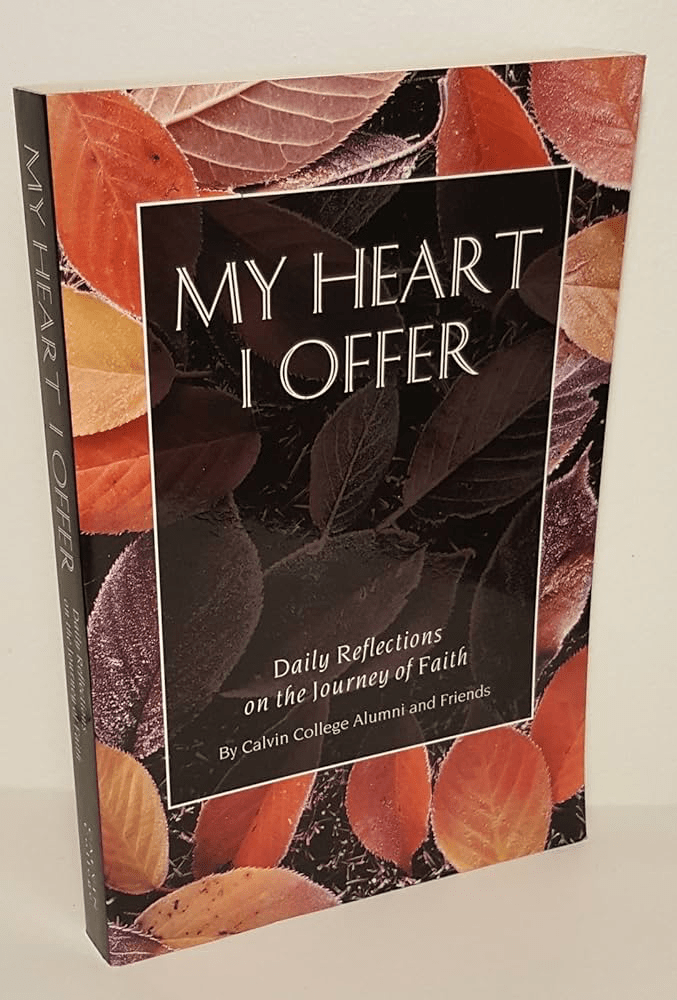
Many love this Psalm. I have a Calvin University alumni devotion book entitled My Heart I Offer with 365 devotions, one for each day of the year—all written by different Calvin alumni. Now the Bible has 1189 chapters to choose from in it, but in this devotion book 8 alumni chose to make their devotion focus on this one chapter, Psalm 139. I don’t know the math, but that huge disproportion tells you that this is a beloved Psalm.
Many have memorized verses like verse 13: “you knit me together in my mother’s womb.” It’s a pro-life favorite. “I am fearfully and wonderfully made”—it’s been a theme verse for celebrating your natural size and all sorts of other issues, including sexuality and gender debates. Our own local Christian school, GCCS, recently had a song called “Wonderfully Made” as its theme song for the year, emphasizing God as our Creator.
That’s good and fine, but I want to look at the whole Psalm in perspective, and include consideration of what I’ll call the hate verses, and we shall see, as many commentators have said, that this Psalm is about God the judge, because the whole Psalm is about the Psalmist hoping for vindication from God as charges are laid against him. He wants to be declared innocent.
This is why he cries: “Search me O God and know my heart… see if there is any offensive way in me…”
I explore this psalm as an exercise in self-examination, or God-examination in the midst of polarized times. There is an expression in Benedictine spirituality: “bidden or unbidden, God is present.” I think it fits this psalm. God is closer than you think, and this is both a comfort and a warning. The fact that it reveals is that we are not God.
God as Judge
First, I want to consider the psalmist’s assumption that God is judge. In C. S. Lewis’ book on the Psalms he says Christians see the judge image of God differently from Jews. Christians see God as the judge in a criminal court, where our faults are being tried and found wanting, and as the guilty defendant, the verdict is inevitably going to fall against us. We are guilty and that is why Jesus’ death and resurrection are so vital to our faith: his sacrifice covers the offence.
This is not a false picture of our situation, but Lewis says the Jews see a different angle: they see God as a judge in a civil court, where the individual in question is the plaintiff, not the defendant, and looking to God for justice. The Jews have more often than not seen themselves in history as the small man, the weaker player, who comes to God to right what has been wrong, to make a call in their favour so they can get the lamb, land, or lodging that rightfully belongs to them. Judgment is what they long for in a world of bullies.
We are used to the image of the calvary coming over the horizon to the rescue, but in this psalm, think of an intimidated person seeing the judge coming on his horse over the crest of the hill, ready to judge with fairness, in favour of the small guy.
“Search me, God, and know my heart; test me and know my anxious thoughts. See if there is any offensive way in me, and lead me in the way everlasting.” The psalmist is pleading with God to vindicate him, prove him innocent, make things right.
Insecure
So if God is the judge, who are we? We are, by nature, insecure creatures. This is why the Psalmist begs God to exonerate him. Insecure people need a trustworthy judge.
Here is another reason to celebrate God the judge: he relieves us of the job. Some of us are our own worst judge, and we flog ourselves, tortured souls of our own self-condemnation. The good news here is that the one who knows everything, who created your inmost being (which in Hebrew is literally your kidneys)–he judges with justice and mercy, has the job of judge already. We are relieved.
Let me add this: there is a difference between being judgemental and making a judgement. We all make judgements everyday—decisions about what is good or best verses what is bad or worse, and we carefully discern a way forward. Being judgemental suggests we are being hasty, overly harsh, and probably not a little biased. We are, as I said above, insecure creatures.
So let’s bring this home: you are wondering whether to date or even to marry someone. Or you have a hard decision to make with regards to your child. Maybe you are on the brink of making a large investment. Perhaps you’ll have to choose a university, a program, a career path or even retirement. You have to make judgments about what is best.
What is right? How do you know you’ve made the right decision?
Here is the problem with human beings: we never have all the information. We are biased. We can be selfish, enticed by the wrong things, or persuaded by the wrong people. Sometimes we can change our mind over a year, or even overnight. People will second guess us, and even question our motives.
Anthropological Math
I’m not sure of math, I told you, but here is my anthropological math, something I’m more sure about: no human being is ever more than 74 percent righteous, at our best. When we make decisions, we are usually a C and rarely any better. In fact, when we think that we are 75 percent or more righteous, we tip into a mindset of self-righteousness, which immediately puts us back down to less than 50 percent righteous.
Uncertainty comes as a liability of our species we need to learn to accept with humility.
To be sure, our hearts were set to God’s frequency in creation, but our fallen state has weakened the signal. Not only are we hopelessly uncertain, Jeremiah said (17:9), “More tortuous than anything is the human heart, beyond remedy; who can understand it?” John Calvin said the human heart is a “factory of idols”—you might say today a live-stream movie channel of distractions. So we need help. We need something or someone outside ourselves to guide us, who does have all the information. That being is God, and he is never judgmental, and that is why the Psalmist turns to God as his judge. The Lord is 100 percent righteous, all the time.
The Psalmist says, “You know me.” He says God not only knit him together in his mother’s womb, God knows what his body is doing in any given moment: “You know when I sit down.” “You know my thoughts from afar,” he adds, and “before a word is on my tongue, you Lord know it completely.”
Bidden or unbidden, God is present.
In this Calvin University devotional I mentioned earlier, Theologian Neal Plantinga writes in a meditation on this Psalm that “we can shield our thoughts from each other, but not from God. We can hide our shame, but not from God. We can outsmart our competitors, but nobody outsmarts God… it can make a person crazy. Everywhere we go, there is God. Even inside our own brain, there is God. We always have company. We never have privacy.”
You might say the phrase “God is closer than you think” is a double entrendre.
Honest to God
In this light, I’m reflecting on debates on human sexuality, and my denomination’s Human Sexuality Report (The Christian Reformed Church in North America). I read the debates on-line: congregations, families, individuals are making judgements about this issue, some are even quite judgmentally. There has been and will be much hurt, as truth and morality are played off against justice and affirmation, the Bible pitted against compassion, and everyone claims love and the welfare of children as the greatest of their motives. There are layers of cultural, theological complexity here, and we all have blindspots.
I wonder if a little dose of Psalm 139 might help us all be just a little more righteous, just a little further up on the anthropological math charts? What if we all prayed with the Psalmist: “Search me, God, and know my heart; test me and know my anxious thoughts. See if there is any offensive way in me, and lead me in the way everlasting.”
This doesn’t mean stop pursuing truth and justice. It’s a suggestion to pause: some spiritual guides talk about centering yourself as a spiritual exercise, but this is Psalm suggests an exercise in de-centring the self.
Because we all have confirmation bias, and we all are swayed by friends, family, experience or internet algorithms. Are we truly seeking or prematurely settled? Are we honestly seeking God’s will on this, or is our own will subtly standing in the way? Again, my anthropological math suggests we all move with mixed motives most of the time. We are insecure creatures.

I know myself enough to not trust myself alone. I recently reviewed a book by Canadian sociologist Sam Reimer called Caught in the Current that explores the Age of Self-Spirituality. He says people used to look outside themselves to some greater authority, but now everyone looks within. “I am the only one who can tell me the truth of who I am” is the new creed. Feelings have become the new gauge of reality, truth and justice.
Not this Psalm.

You know the phrase, “Honest to God”—it’s a way people emphasize the depth of truth they carry when in a conversation. (It’s also the name of an old but famous liberal theological text by John Robinson that suggests in good Enlightenment fashion that it’s time to turn from tradition to a modern rationalism. We might say today that it could be the title of a book that shuns modern rationalism to embrace cultural diversity and justice. But I’m not fighting those battles here).
I’m suggesting it’s time to be honest to God in a different way. More personal and confessional. Set everything else aside, our ideological commitments, all our pride, our laziness, our stubbornness, and just be honest to God. We can do that in prayer, in reading, and in consultation with trusted others. We can ask a friend, “Am I being honest here?” It requires patience, and it might just cultivate humility.
I bumped into the president of Calvin Seminary recently and asked him how it was going. He said, “John 1 speaks of how Jesus was full of grace and truth, and people feel they have to choose one of them. But humility can link us to both.”
Let me venture this: whatever judgements you make for your life, God is not elsewhere. There is nowhere you can flee from his presence. God is bigger than our imaginations and our disputes, and he is the 100 percent righteous judge. This enables us to say “God be with you” when we have to part ways. God is bigger than the paths we might choose.
The Hate Verses
Which brings us to the hate verses, the verses no one memorizes or embroiders on their pillows. Talk about honest to God. “Slay the wicked,” he sings. “Do I not hate those who hate you, Lord, and abhor those who are in rebellion against you? I have nothing but hatred for them; I count them my enemies.”
I looked this up on YouTube: all the songs that are based on Psalm 139 skip over these hate verses. Even the ones that are almost word for word from the Psalm leapfrog over verses 19-22 and pick up again on the final refrain. Except one song, in the old grey Psalter Hymnal by CRC philosopher Calvin Seerveld, that begins its final stanza with the words: “O Lord, destroy the violent who speak of you with ill intent.” It’s not a sentimental psalm.
There is a lot of talk about hate these days, and the accusations usually, like the Psalmist, come from someone who feels victimized. Let’s admit it: hate is a very human emotion. We all hate some things or people, if we are honest to God. Hate usually reveals some deep-seated fear that lurks in the underground of our hearts. But even deeper, beneath the fear is often a foundation of love for something. The Psalmist here is professing his passionate love for God as he asks for vengeance and death for his rivals.
But let me just say, this is not a model for us to emulate. Not every verse of the Bible is a great example to follow. Consider these hate verses further evidence of why the Psalmist needs to have his heart searched by God. It’s evidence of my anthropological math. He wishes violence rather than mercy on those who bear God’s image. He believes in black and white, friends and enemies, the good and the bad people.

Maybe he is right. There are dastardly vile human beings and some movements in history have been nothing short of atrocities. But here he has made himself the judge, and he’s a judgemental judge. Because he is an insecure human being.
You might say this part of the Psalm is a sinful prayer—and yes, prayers can be deeply malicious or proud or self-justifying—think of the Pharisee and the tax collector story. Sometimes we are so selfish, so blind to our own faults, we descend so low, the anthropological math gets into the single digits. We are backing up to the gates of hell where hate rather than love reigns.
But listen to this: the Psalmist himself has already testified to this deep truth: “Where can I flee from your presence? If I go up to the heavens, you are there; if I make my bed in Sheol, you are there.” The word Sheol, you may know, is the land of the dead in Hebrew. Some translations read, “the grave,” “the netherworld” and some say “hell”—the place we would least expect God to be, because it is the place most basic to our humanity—the place of mortality, of finiteness, of wickedness, of decay and death.
So. Even when you hate, or you’re depressed, anxious, dying inside: bidden or unbidden, God is present. “The darkness is not as dark to you,” says the Psalmist.
A Dark Glass
In fact, in light of the gospel, we know that God is not only everywhere, generally speaking, but he has in the person of Jesus Christ, as the creeds say, “descended into hell” on our behalf. As he did on the cross, he continues to do today, absorbing our hate and violence, taking it onto himself, and replacing it with forgiveness. “Father, forgive them, for they know not what they do.”
“They know not what they do.” That’s us. Seeing through a glass, darkly.
“They know not what they do.” That is Jesus speaking, Immanuel, God with us. A merciful judge.
A commentator summarizes Psalm 139 this way: “Above all there is a sense of the existential reality of God. The divine ‘Thou’ is as significantly real as the human ‘I’.” This is the honest intimacy of creature with Creator.
God is closer than you think. Even if you struggle with hate.
The good news is that God is the judge, and he judges with fairness and mercy. The position is taken, we need not apply. But we do still have to make judgements, and so we best do so with fear and trembling, knowing our anthropological math, like the Psalmist, wavers on the best of days. We are insecure creatures.
As our church and society go forward into uncharted territory, as we wrestle with decisions about university, relationships, jobs and faith, let us be honest to God as a spiritual discipline. It may just come down to this: Ask yourself: am I paying attention? Or am I running on preconceived notions I have not fully inspected? Have I read books or heard podcasts that don’t fit my algorithm?
It may change your mind or at least change your posture.
“Search me, God, and know my heart; test me and know my anxious thoughts. See if there is any offensive way in me, and lead me in the way everlasting.”
 Sensus Divinitatis