These two quotes come from a research paper examining Chinese converts to Christianity within the diaspora. Significantly, all their participants “had a consistently high level of education.” The authors conclude that their participants felt “touched by love”—not only from the kindness of Christian friends but also by a benevolent divine source, an active primary Agent moving in the world. This love was inviting to them given the more “transactional relational dynamics” with which they were familiar (Scorgie, Scorgie, Chow and Hsieh 2022).
On June 8th 2024 Global Scholars Canada and Intervarsity Christian Fellowship Canada’s faculty ministries hosted a panel discussion at Faith Baptist, Oakville, Ontario (Canada) entitled “Soul of the Chinese Academia: Faith Stories from Students & Faculty in the Middle Kingdom.” We had six speakers offer insights on the state of the Christian faith in China’s universities, and what we heard was deeply personal, significantly historical, and profoundly cultural with regards to the Chinese soul.
We chose the word “soul” because it has immediate connections to the spiritual heart of the individual, but it also is a way to talk about the religious character of an institution. The word “soul” has been used to talk about the philosophical depth of a university’s vision—as one book on Harvard University entitled Excellence without Soul suggests the institution is losing a sense of social responsibility in a quest for status. “Soul” can also be a reference to some integrative principle, and the book Restoring the Soul of the University: Unifying Christian Higher Education in a Fragmented Age speaks of putting the unity back in the diversity of the large, sprawling and increasingly pluralistic and compartmentalized modern university.
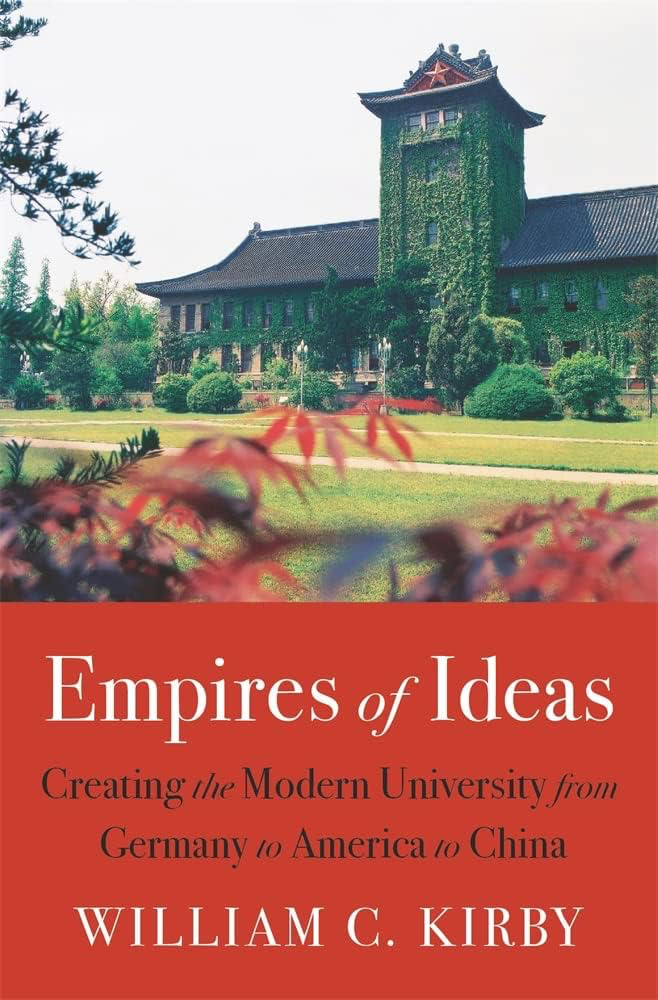
Our symposium title is also a nod to George Marsden’s book The Soul of the American University: From Protestant Establishment to Established Nonbelief which just celebrated a 25th year anniversary edition. If we were to venture a similar historical angle for the Chinese university, it might be this: from Western borrowing to integration with authentic Chinese foundations (see Empires of Ideas: Creating the Modern University from Germany to America to China by William C. Kirby, Belknap, 2022).
Our concern, however, is not to establish where educational superiority lies. Jesus himself said, “What does it profit you, if you gain the whole world but forfeit your soul?” In our panel’s context—this pertains to the individual soul, the university’s soul, and the nation’s soul. No ambition is more important than the ambition to be connected to our divine source, guide, and goal.
Entrance to the Symposium
Our angle of exploration when it comes to China‘s universities is explicitly Christian. Christianity is the fastest growing religion in mainland China and the chosen religion for a growing number of Chinese from the diaspora. While they are a minority in China, they are becoming one of the largest populations of Christians on the planet. Many of these Chinese Christians are highly educated, and carry with them a deep commitment to the value of education, a value that has a long history in China, not least of all due to Confucius.
Christianity, however, has also been a significant influence in China. In fact, few realize that Christianity was in China almost as early as it was in Britain. Syrian Orthodox monks reached China in 635 AD, just after Augustine landed in the United Kingdom. This legacy continued through such figures as Christian scholar Matteo Ricci in the 16th century. In limited but important ways, Christianity is a Chinese religion—meaning it has been appropriated by the Chinese as their own and comes with many elements that are endemic to Chinese culture and history.
In what follows we will share notes from our six panelists, each of which in turn illuminated a different aspect of faith in Chinese academia.
Undergraduate Student Faith Experience
Influence of Western Christian teachers
Growing Christian faculty in China
Ministry to Christian Scholars
Christian Universities
Chinese Diaspora and Christian Faith
Names of some panelists have been omitted for security reasons.
1. Undergraduate Student Faith Experience
One of our speakers shared his student experience in a Chinese university with some detail. He is a Chinese citizen who was socialized, as he says, “in the communist and atheist worldview since kindergarten.” Education is highly valued in China, as is conformity to nationalist goals. This is how he characterizes his life before university:
All my classmates were indoctrinated into staunch atheism, and our parents were even more staunch than us. We didn’t believe in any god or savior, we ourselves were our own gods. We thought human beings and all other living creatures were the result of natural evolution. Buddhism, Christianity, and other religions were considered superstitious, believed only by those who were culturally backward, uneducated, and ignorant people. Before I came to know God, I was proud, stubborn, and empty, miserable like a maggot living in a heap of dung.
He spoke these words with a depth of earnestness and passion, borne out of a radical change of perspective.
When he entered university, he confesses he lived a prodigal life and was receiving the poor grades for the first time in his life. His girlfriend then broke up with him and he turned to alcohol. He summarizes this season: “It was the darkest period of my life. . . I felt a wave of panic, regret, frustration, and pain.”
At some point, a fellow student shared the gospel with him—a brief, simple summary of God’s love for him through Christ’s sacrifice and resurrection. He explains:
I felt a strong sense of God’s presence and God’s love, like a bright light shone into deep darkness, and as if Jesus had entered my heart and given me a warm embrace, whispering to my ear that He loved me. Even though I was totally unworthy, He loved me, to the point of dying for me!
This young man was spiritually formed and baptized through a small house church-based campus ministry run by Korean missionaries. He enjoyed the group so much he became a leader, then a pastor at the house church, continuing to serve in the campus ministry. He was able to obtain a graduate degree in theology through an underground seminary.
Around the same time, he met a determined young woman who would sometimes prevent students from accompanying him to church. She was a fierce opponent but hearing the good news warmed her to faith, and she eventually became his wife and primary supporter. Eventually his parents also came to faith in Christ.
Kunming University, China (Photo from Pixabay)
Ideological coercion and strict monitoring from the government has recently restricted freedom of religion and Christian students and faculty are wary of expressing their faith. Yet this panelist still knows at least a dozen earnest students who have persisted in their faith and received training as pastors, and one church that expanded into over 130 churches across China within six years. This is very much the fruit of campus ministry. This panelist is now studying practical theology at the PhD level in Canada, focusing his research on his campus ministry work.
2. Western Christian Teachers
How do Chinese students ever hear of Christianity? Often they hear through a visitor from outside China. One example is another member of our panel, a Caucasian Canadian who spent years in China teaching EAL (English as an Alternative Language) at two Chinese universities; one in southwest China and one in east China. As a Christian, she shared her faith with her students—by hosting meals, hanging out with students, and praying for them.
There are hundreds of Christians who have taken the risk to go to China to serve in various capacities, and also share their faith in Christ as they teach. We have had our own Global Scholars there in the past serving China by teaching at university and bearing witness to the abundant life found in Jesus outside of the classroom through word and deed.
This speaker spoke of both professors and students becoming Christians due to the presence and persistence of people like herself as well as the testimony from local Chinese house churches. They know they are being watched by the government, and those who come to their apartments are also under surveillance, but they trust that these cross-cultural relationships will be honoured by God and by the human need to freely explore both rich friendships and religious commitments.
The Four Gentlemen
Symbols of Confucian noble men, or junzi.
They represent the traditional Chinese virtues, such as uprightness, purity, humility, and perseverance, and they correspond to the four seasons (the plum blossom – winter, the orchid – spring, the bamboo – summer, and the chrysanthemum – autumn).
“Communitywas a key part of my time in Asia and when I returned home to Canada, I realized that community is something we are still trying to learn more about here.”
– Western teacher after spending years in China
These teachers and professors love the Chinese people and learn much from their hosts. There is a mutual education that takes place as they share the gospel and learn about Chinese language and culture. This panelist reflected on her time in China: “Community was a key part of my time in Asia and when I returned home to Canada, I realized that community is something we are still trying to learn more about here.”
3. Growing Christian Faculty
Another Chinese citizen and member of our panel grew up in an atheist household and came to faith in Jesus while attending a Chinese university in the early 2000s. There were campus ministry groups that she was curious about, and she came to faith through their fellowship, Christian academic conferences, and the help of Christian professors (most of whom kept their faith private). She explained that there was much more intellectual freedom and tolerance than there is today.
Although faith expression at university in China remains very difficult, the returning diaspora of PhD students from the West to China brought friendly connections to the Christian faith. In spite of surveillance cameras and informants in classrooms, some still pray together in faculty offices. She expressed her faith in one particular assignment and was encouraged by her professor to pursue intellectual freedom. Other professors organized conferences where the integration of faith and scholarship were encouraged.
Eventually she received her PhD from a Chinese university and then became an assistant and then associate professor in a national university. In order to have more academic freedom, she left China for Canada, and has been able to do research here in her field. She speaks freely of her faith with curious visiting Chinese scholars and local Canadians, “not aggressively sharing… but leaving the task of searching for truth to them.” Her future remains open, but she would like to stay in Canada at this point.
4. Ministry to Faculty in China
Another panelist spoke live-stream from China to those gathered in Oakville, drawing our attention to a worldwide guild of Christian scholars who mentor each other through an internet portal and mobilize to be a redemptive influence in their respective institutions. This speaker has a PhD in theology and did some of his graduate education in the USA but resides in China today.
Chinese scholars have interests in Western theology, and weigh it in a Chinese way. (Photo from Pixabay)
He spoke of the influence of “cultural Christians” in China—those who deny the supernatural aspects of Christianity and have little relationship to the church. Significantly, they study Christianity as an important global and cultural phenomenon, and their research influences the church. Especially after the death of Mao in 1979, interest grew in philosophical theology but not in biblical or systematic theology. The motivation was to investigate how Western Christianity might contribute to modernization in China.
A smaller group of confessing Christian scholars is growing in China, caught between nationalistic cultural Christians and fundamentalistic anti-intellectual Christians. He hopes to see more cultural Christian academics join the ranks of those confessing Christian scholars and so strengthen the church for ministry in China. This happens by establishing a network of Christian scholars, gathering them together for special events, and supplying them with Christian academic resources—like books translated from English to Chinese.
We have hope that both cultural Christians and confessing Christian scholars can be a redemptive influence in China’s universities and in developing more Christian scholarship in China.
5. Christian Universities in China
Another panelist was Dr. Ruth Hayhoe, professor at the University of Toronto in the Ontario Institute for the Study of Education and secretary of the GSC board. Ruth’s biography is available here, and her story includes 17 years in Hong Kong and two years as the cultural secretary to China for the Canadian embassy in Beijing. She spent more than half of her adult life serving as a bridge between China’s universities and education system and the West. She has a deep love for the Chinese people, its language, and especially its universities, particularly those with a Christian liberal arts legacy. She has visited two or three hundred Chinese universities, worked with many Chinese students through the decades, publishes in the area of comparative education, and has a good sense for the dynamics of faith in the university scene in China.
Dr. Hayhoe, who is herself a translator of Chinese scholarship into English, explained that even in spite of censorship and resistance from publishers in China there are still some good publications being released. She also spoke of the tremendous contribution of Chinese Christian universities to Chinese culture, not least of which was in their beautiful architecture and their opening of leadership positions to female scholars. These institutions are a wonderful testimony to collaboration between missionaries and Chinese leaders.
She described the work of Zhang Kaiyuan (1926-2021), long time president of Central China Normal University, who mentored many other scholars in research on the legacy of the historic Christian universities. She also mentioned the influential work of the United Board for Christian Higher Education in China (1922-1952), as it fostered the development of these universities in a way that honoured Asian values in a liberal arts curriculum with the support of multiple Christian denominations. Many of these institutions were radically changed when Mao came to power and they were transformed into public universities, half of which were normal universities (for teacher training). (This board is still active, with more than 100 years of service, now supporting universities all over Asia).
Significant to the symposium was a book translated from the Chinese into English by Dr. Hayhoe entitled Liberal Arts & the Legacy of China’s Christian Universities (Springer 2023). This collection of 14 articles investigates the history, sociology, and educational philosophy of China’s historic Christian universities. These articles by current historians and sociologists in China argue that despite the Cultural Revolution and current restrictions on religious teaching, the legacy of these universities continues to influence the wider world of education in China, as their liberal arts approach fosters not only connections to the Western liberal arts tradition, but also fruitful engagement with the history, philosophy and religion of China.
Incidentally, all the authors of this anthology can link their biographies in some way back to Dr. Zhang Kaiyuan’s influence. This is a testimony to what the legacy of just one scholar of integrity could do in a generation.
6. Chinese Diaspora and Christian Faith
Dr. Gang Li is the chair of the GSC board and professor of leadership in the graduate school of TWU in Richmond, BC. His story brings together the experience of a student, a professor, and one involved in global Christian higher education.
When a child, he remembers asking his dad, “What happens when we die?” His father replied: “We become grass.” He recalls being enormously dissatisfied with this response.
When he met a Christian English teacher at Yantai University where he was pursuing a B.A. in English, he asked her the same question. He was curious, because she intrigued him: she was a single woman far from home, making a small salary, and yet she was consistently hospitable and shone with an infectious joy.
She responded to his question by explaining that death was a consequence of human sin, and after death, there is either heaven or hell. There was hope for everyone, she added, because of the life and death of Jesus Christ, the divine human who took on our sin through the cross. This answer impressed him: it made sense of the tragedy of the human predicament and yet offered hope.
Soon he became a Christian through the influence of this teacher. He grew as a Christian through the campus ministry fellowship, where he both learned and served. He also worked at an orphanage and at a foster care centre and became involved in the house church movement. All these experiences profoundly shaped him as a committed follower of Christ.
His education continued with an M.Sc. at Cardiff University in Wales, U.K. and then a PhD at University of British Columbia. There he did research on the political implications of Chinese international student mobility. More specifically, he examined how Chinese students’ engagement with Western countries affected their perspectives and activities with respect to democracy, and how this might affect democratic possibilities in China’s future.
Statista reports 100,000 Chinese international students in Canada in 2022 (Photo from Pixabay)
Now he is a professor at Trinity Western University, where he lives out their vision statement—to think truthfully, act justly, and live faithfully for the good of the world and the glory of God. This vision is meant to be globally engaged, student focused, and Christ-centred. This vision is a good example for what campus ministries, Christian professors, and Christian universities can pursue, even in China.
Dr. Li then turned to the global picture for Christianity. He noted that Christians continue to be about 30 percent of the world’s population, although the majority of them are now in the Global South. In terms of the Biblical story, of Creation, Fall, Grace, and Glory, we are now in the Grace stage of the unfolding story, and missionaries and scholars continue to share the gospel around the world, inviting others to be part of God’s work in God’s world. Global Scholars Canada is one small part of that global mission, as it equips and sends Christian professors to underserviced regions of the globe.
In terms of the soul of Chinese academia, God is unfolding his purposes by his grace as well, and he does this in a very Chinese way. Even though there has been repression of both scholarship and faith in China, both books and faith have been preserved through the last thousands of years. Part of this legacy in China is a stress on virtues, especially on education and history, and the importance of safeguarding knowledge. Significantly, Chinese people “have the patience to wait for the right time for truth to be revealed and justice to be done.” The implications of this for the current state of repression in China were not lost on the audience.
Prayers for China
One thing evident from our panel: Chinese Christians are interested in an intellectually robust faith and care deeply about the role of faith in education. In fact, the Chinese mind may be predisposed to a more holistic approach to faith and education because it lacks the Western dualism inherited from the Greeks. The panelists were incredibly heart-felt about their experience of God and his love for them. There is something experiential in their encounter with Christianity that is deeply emotionally and spiritually moving for them.
Two further notes from this event. It was emphasized by multiple speakers that in Chinese culture actions must accompany words. Testimonies must come with some sacrificial participation or they will not be respected. Secondly, it is interesting to note that while many young people in the West go to university and drift away from their Christian faith, in China the opposite is true: students from atheistic backgrounds find Christian fellowship at university and they convert to the Christian faith. In the West, the loss of faith is due to the university curriculum and lifestyle; in China, the reception to faith happens in spite of the curriculum and lifestyle of the dominant university culture. There is a hunger for meaning, truth, and hope that Chinese students find in the Christian faith, and most of this spiritual thirst finds nourishment in campus ministry groups.
Temple of Heaven, Beijing
One thing that was constantly asked of the audience as we worked our way through the various speakers: pray for China. We love China and wish the best for its people. Pray for freedom of religion and conscience, for the healthy growth of the church, and for the students and professors who tentatively and passionately seek and follow Jesus as they learn and teach in China’s universities. Pray that students will seek and find spiritual nourishment for their souls; for Christian professors who feel closely monitored and restricted; for the Society of Christian Scholars as it equips Christian professors around the world; for the continued legacy of Christian universities in China; and for the Chinese diaspora who now attend universities around the world. Chinese Christians have a deep and thoughtful spiritual contribution to make to World Christianity.
“My experiences have been touched by the Holy Spirit, especially when I felt God’s love and acceptance all of a sudden. Even when I listen to worship songs and feel touched and cry. I know that’s the Holy Spirit’s work in me.”
Chinese immigrant (Scorgie, Scorgie, Chow and Hsieh 2022)







 Sensus Divinitatis
One thought on “Faith in China’s Universities: Students, Professors, and Growing Global Networks”