
“It is excellent! … This is one of the most current and best books that I’ve read to equip and guide me (and to offer me plenty to ruminate on). I’ve been inspired to do a 3-week mini-series [on themes from the book].”
– Local Pastor
These comments are from a pastor’s email to me who is in the middle of reading our book. We have received many more emails and comments on social media from readers, and it seems we have touched a nerve.
Blessed are the Undone: Testimonies of the Quiet Deconstruction of Faith in Canada (New Leaf Press), co-authored by Christian Courier editor Angela Reitsma Bick came out in September 2024, and it is time that I blogged something about it. It took almost three years of research, interviewing, and writing, and it seems to be resonating with many, many Canadians who are unravelling, and not least of all in terms of their faith. Christendom is waning, the American century is fading, and evangelicalism has been scandalized. Many have become unhinged, and wander in a sort of ecclesiological exile or spiritual fog.

What about you? Are you feeling a little undone these days? Or do you know someone who appears to be undone?
This book is not an armchair opinion piece or a personal memoir (although we share some personal notes). Neither is it an apologetic defense of the faith in the face of what can feel like a threat to what Christians hold dear. Our book examines the stories of 70 ordinary Canadians grappling with church hurt and trying to find their way to some reconstructed faith.
These are the stories of many people you know. They are the stories of our churches, our friends, our families. These stories are our own stories to a certain extent.
Here is the big picture. Christianity in Canada has been in precipitous decline over the last 50 years. In 1971, 90 percent of Canadians identified as Christian and only 4 percent as religious “nones.” The 2023 number is 44 percent (Sarah Wilkins-LaFlamme and the International Social Survey Programme). Statistics Canada says in 2021 the “nones” were up to 34 percent. That suggests they will pass the number of Christians very soon. For the first time since colonization, Christians are no longer the majority in this country.
Now the “nones” are a very mixed group of people, religiously speaking. They are certainly not all atheists. They are Canadians who don’t see themselves as affiliated with any particular tradition. That number is growing, and we don’t know too much about them (although None of the Above by Wilkins-LaFlamme and Joel Thiessen is a great place to start reading).
Introducing the UNDONE
Angela Bick and I have dug into this demographic and uncovered the stories of those who say they have “deconstructed” their faith. They may be religious “nones” or “dones” but they are best described by a new word we smithed: the “undone.” We offer an assessment of the deconstruction trend by examining 70 “reverse testimonies” of conservative and evangelical Canadians. We personally interviewed 28 Canadians and then examined 42 other stories from the podcast Slow Train to Heck by Josiah Mahon. That is 70 stories, many grappling with different forms of church hurt.
“We were told not to ask questions,” was a common refrain. Significantly, that’s not what we see in the gospels. Now Jesus often responded with his own questions in return, but he surely didn’t discourage questions.

Barna recently reported that 37 percent of practicing Christians in the USA are deconstructing their faith. Christianity in Canada is probably not too different in numbers, although we argue that the context here is vitally important.
Note that this trend is not about age old doubt as much as it is about feeling let down, disappointed, or even injured by the church. Think of our book as conducting “exit interviews” with Christians leaving their faith inheritance. Our goal? To let the church hear the voices of those who are within the shifting statistics of our country and to do so pastorally. In fact, in the end we concluded that the deconstruction of faith was a normal and necessary part of growing up to spiritual maturity. Not that every deconstruction is good and right and true, but that deconstructing our human traditions is generally what God calls us to do. It is also known as repentance, reformation, or letting go of your dearest idols.
Our very baptism as Christians can be understood a form of deconstruction/reconstruction: dying to sin and corruption, and rising again with the resurrected Christ and his kingdom.
So coming undone has potential for blessing.
Seven Triggers
Here is what we uncovered. These stories—really reverse testimonies—are about conservative and evangelical Christians who started to ask questions about their faith that led their taken-for-granted faith to become unravelled. This deconstruction was prompted by 7 “triggers” arising from their church experience: purity culture, young earth creationism, Biblical inerrancy and violence in the text, church scandals (especially clergy sexual abuse), prejudice against LGBTQ+ persons, the legacy of residential schools and the church’s complicity in colonialism, and finally, Trumpism and (white) Christian nationalism. Significantly, only a minority of our Undone deconvert from Christianity; almost all leave hard-line evangelicalism behind.
Our manuscript was appreciated by a wide variety of people who gave a blurb for us. Philosophy professor James K. A. Smith says it is “charitable without being acritical.” IVCF Graduate Student Director Alan Lensink says “It’s an important book. Thought-provoking, heart-breaking, commendable.” Computer scientist David Flatla wrote that “it helped me feel comfortable with my own questioning, while also giving me hope that something better waits on the other side of my doubts.” Evangelism professor John Bowen just playfully said, “Its required reading. Buy it…”
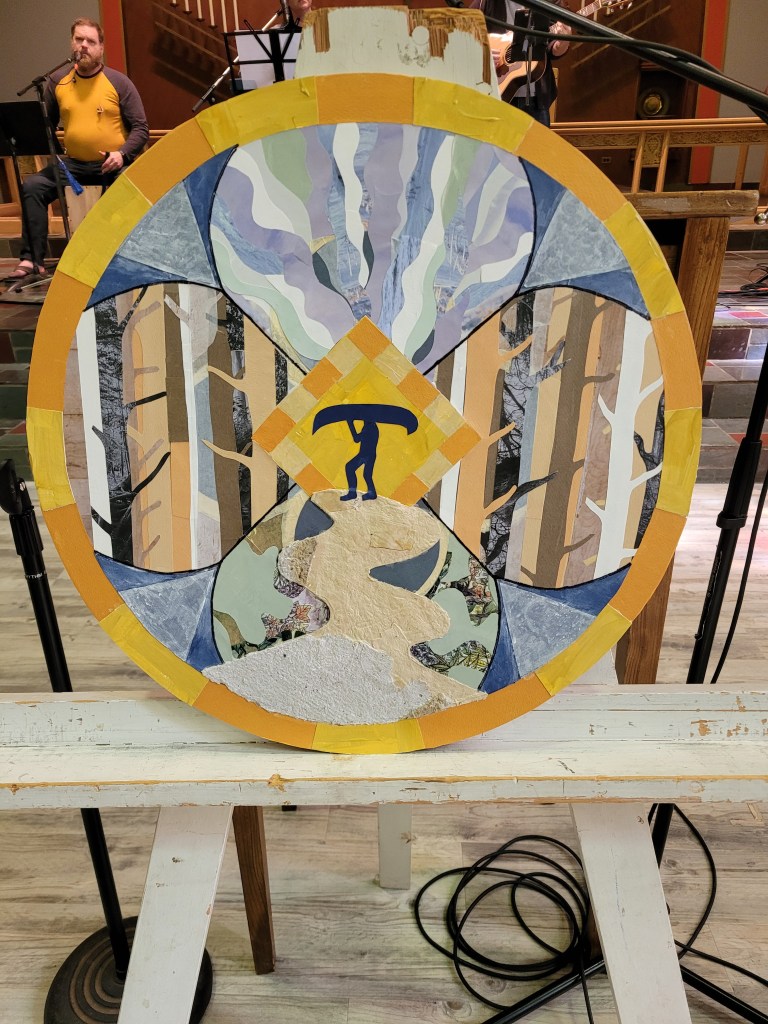
This artwork of a lone person portaging a canoe was crafted by my niece Nina Schuurman-Drenth, a pastor at Eucharist church in Hamilton. It was on display at The Table, a launch for our book in Kitchener-Waterloo (and Saskatoon!) in October 2024.
See the interview we had with religious writer John Longhurst in the Winnipeg Free Press and with the Tentative Apologist (Randall Rauser in Edmonton) here.. Listen to the podcast we did with the Evangelical Fellowship of Canada’s research team called Faith Trends. Read a review by John Van Sloten in Christian Courier, a summary review by Paul Verhoef in The Banner, a critical and thorough review by philosopher Elmer Theissen, and an article on the Flourishing Congregations Institute website. Join a reading group with New Leaf Press’ Learning Centre or start your own local group! Angela or I may even be able to come by and lead a discussion if you asked. There is more if you google the book!
(See the playlist here).
“I also appreciate how deeply Canadian this book is,” added Smith. We give a very deliberate Canadian perspective on the topic of deconstruction. And there is a very Canadian argument that permeates the book, suggesting that much of what Canadians are deconstructing is American conservative religion. Unfortunately, much of what they are reconstructing is American progressive religion. It seems the nation to the south is so large, and its media so overwhelming, we can’t see what is being offered right in our own backyard. We argue that something more local—more Canadian—is vital for the renewal of the Canadian church.
Incidentally, many Americans are deconstructing many of the same things. What we shine a light on is how the Canadian context suggests a different reconstruction could be possible. Our final section point to the importance of Truth and Reconciliation as a model for moving forward.
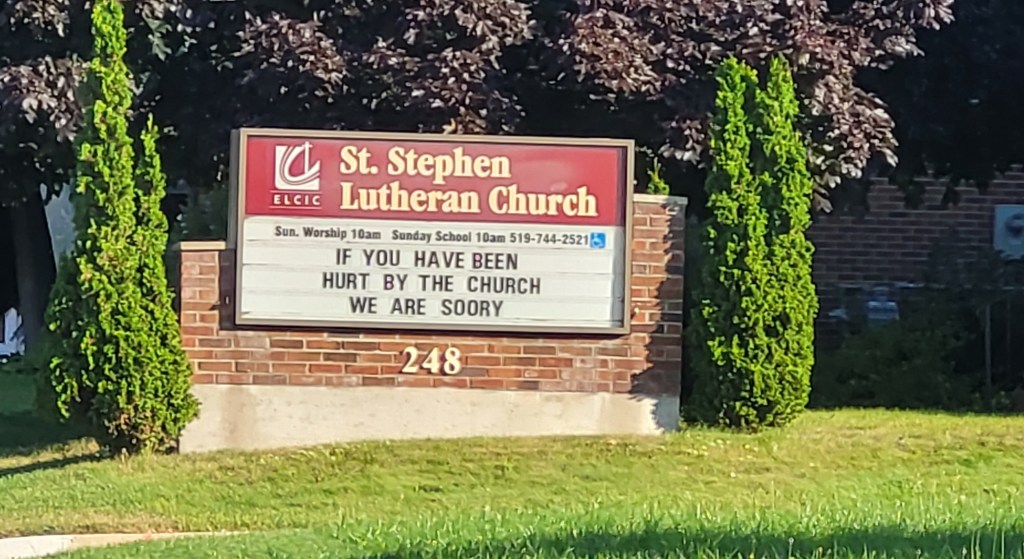
This book on deconstruction is co-authored. It is not just a male social scientist or a female journalist’s private work. It is part of a spiritual, theological and ecclesiastical dialogue we have had with others over the last 3 years put into a book with photographs and poetry. We even have a study guide for small groups to keep the conversation going. Free. Just email us with your request. Our goal is to stimulate good discussions in your neighbourhood, for the blessing of the church and the common good of all. We actually think it has value for the whole planet. Read it and see how we connect it all back to our love for the land. In particular, this land, Canada.
Why the Canoe on the Front Cover?
Permeating the book is the metaphor of journey, specifically a backcountry canoe camping excursion. While there is always the danger of running aground, going adrift, or capsizing, there is also the hope found in a portage to the fresh waters of a new lake. Join the conversation this book ignites about a topic that is close to many families and churches today, who may be navigating some strange waters.

We’d like to thank New Leaf Press team, and especially editor Amy Bratton for their tremendous effort in helping us get this research out to readers. We are also thankful that Neal DeRoo, a philosopher from the Institute for Christian Studies steeped in deconstruction texts was able to write our forward. You can read more in the acknowledgements, but it has been a tremendous effort on behalf of so many people.

Something I did not expect: it was #1 bestseller on its various Amazon subcategories for about 28 days within the first month. It also got the “#1 Gifted” designation the other day. People are coming to my door to buy copies, and it’s exciting. Best of all, it seems to be offering some pastoral gift to people who are on a spiritual journey that intersects with the themes of the book.
Blessed are the Undone. We let the Beatitudes of Matthew 5 lead the book, which we find poignant in The Message version. The lyrics to the song “The Kingdom is Yours” echo the sentiment, with lyrics like this:
Blessed are the wounded ones in mourning
Brave enough to show the Lord their scars
Blessed are the hurts that are not hidden
Open to the healing touch of God…
We hope this book is both a comfort and a challenge. Comfort in knowing you are not alone, and a challenge to lean into a new day of paddling together towards the fresh water of a new lake.
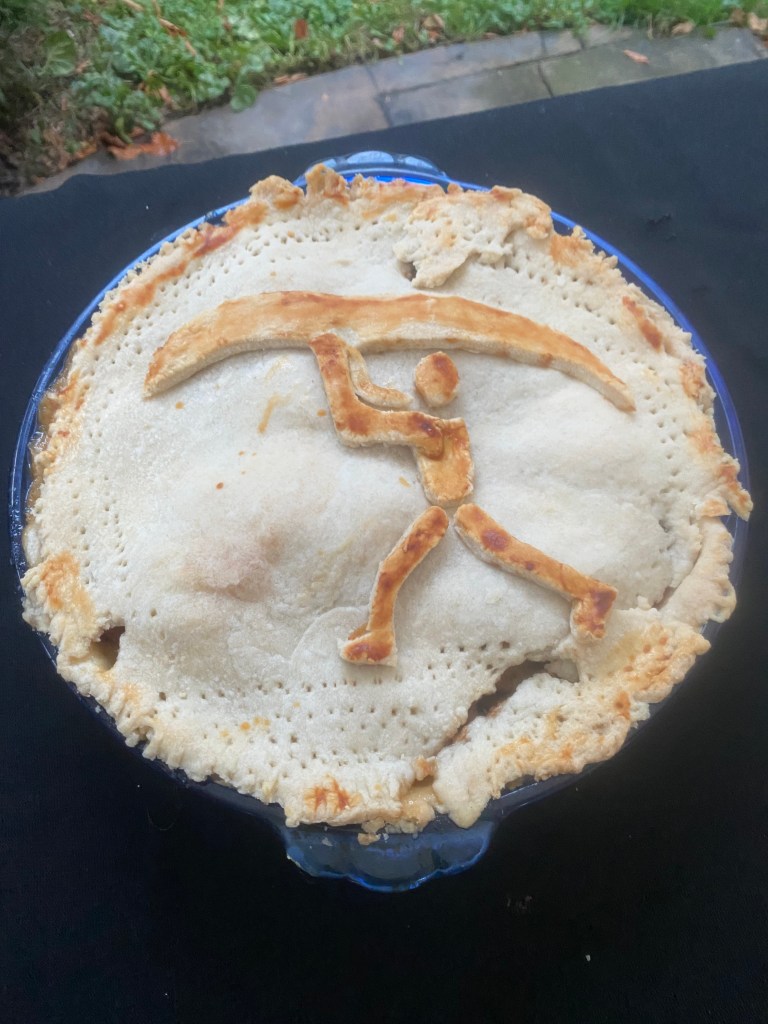
 Sensus Divinitatis
2 thoughts on “Becoming Undone: Deconstructing Faith and Church Hurt in a Polarized North America”