
Jim Klaas is a friend and colleague here in Guelph, Ontario, who has a knack for making those kinds of observations that get you thinking and wondering. He has studied the process of learning for decades and has made it a cornerstone of his life and relationships. You might catch him with his pocket notebook meeting with a Living Room group, mentoring a friend online, or connecting on Zoom with friends around a common interest. I thought his passion for learning was appropriate for a New Year’s blog, inspiring us all to never turn off our curiosity tap. (Photos from Jim)
What did you learn this past year and what do you want to learn in the coming year? (Pause….) This is a natural time to reflect back and to think about what lies ahead. I invite you to take a few moments to observe yourself and consider some possibilities in your learning journey. First, let me share my story as a learner. Observe what I learned and had to unlearn in the process, then compare it to your own journey. Hopefully it might uncover something very interesting.
Life-Long Learning
God made us with a built-in potential to change, grow, mature, repent, and be constantly inspired to investigate something new. Learning doesn’t have to end when you graduate from formal education.
When I first heard the term ‘life-long learning’ my reaction was one of terror. I was in university and I was planning on finishing my degree and I was ready for life-long living. I had had enough of formal education. But somewhere between a ministry assignment on the east coast, learning Spanish for a year in Costa Rica and then a head-on cross-cultural ministry in Argentina, the desire and ability to keep learning awakened in my heart along with new skills and interests. This was prior to internet days, when a letter and answer from head office took 6 weeks and phone calls to Canada were $3 a minute. It was either learn or be overwhelmed. I needed to acquire new skills, practices and perspectives or go home. Learning became my passion.
When I purchased my first computer down there around 1995, the store manager said that he couldn’t image what a pastor would possibly do with it. Three decades later, we each have a device one twentieth the size in our pockets and 1000 times more powerful. Along with the power of technology, my desire to keep learning has grown. Let me explain why.

- Accelerating rate of change obliged me to learn to keep up: I think it would be fair to say what took a decade in the eighties to double in volume of the world’s knowledge acquisition is now happening in a year. Perhaps that figure is hopelessly out of date and it is now months or days. My love of learning is my life-jacket in this flood of knowledge. It gives me a high sense of agency, direction and purpose rather than being overwhelmed with hopelessness.
- Learning to observe myself while I learn: I started to see patterns in what motivated my learning. I discovered that I didn’t capture much from aural presentations unless I made careful notes. I could read much faster that the speed of audio presentations and that still is my preference. If I could understand why I needed to learn something, it was a whole lot easier. When I did a Masters in Adult Education, I learned the andragogic theory (the science of teaching adults) behind many of my preferences. I also learned things to carefully avoid. I have given up scrolling social media, have put limits on how often I access the news and prefer not to watch reels of any kind in order to reduce unhealthy addiction. I want to be the master of technology and not its victim.
- Gladly exchanging the mastery of theological theory for practical survival: perhaps it was the cross-cultural context, but I found that my understanding of the Scriptures was heavily biased to my culture of origin. I read everything in the singular. To my surprise, Spanish is much clearer between singular and plural. Where as before, I would read John 8:32, “If you continue in the truth, you will be free”, I assumed that I needed to have my devotional time daily, but I missed that the YOU is plural, meaning WE need to learn as a community. It caused me to question what other assumptions needed revising. As complexity mushroomed, I determined it was going to be a lot easier to simply assume that I need to keep learning, rather than assuming that I had it all correct. You probably observe here some healthy deconstruction and reconstruction in this process. I don’t need to pretend to be an expert. I am a learner and even in mentoring situations, I consider the need and opportunity to learn from everyone. I prefer the term reciprocal mentoring since while I am happy to share my perspective, anyone can have an insight or perspective that can help me learn. Regardless of how old or young they may be.
- Learning as a whole person: at one time my perspective was quite stilted to considering thinking as superior to feeling. Subjective things were not as valued as the objective. Science was better than art. Feelings were secondary to thoughts. While I enjoyed the creative arts and music, I would never refer to myself as an artist or musician . It was much better to think about God than to feel God. Worshipping in Latin America changed that in me. Both are possible. Why not think AND feel, as neither is mutually exclusive. The integration of mind and heart opens up whole new vistas for learning where everything can become a learning adventure.
- Invitation into community: This type of learning is an invitation into community. “Nobody knows what everybody knows” where the total sum somehow exceeds the sum of the parts. Every relationship is a potential for deeper community when learning is shared, permitting new questions and exciting transfers of understanding from one domain to another. For example, I learned it was easier to drive in Latin America when I could speak their driving language. By following the proper syntaxis my driving would be safer and more easily interpreted on the road. Of course, the driving language had to change in returning to Canada. Learning is an invitation into community.
Who makes up your learning community? Perhaps the key point for the new year is this: You and I have a new opportunity to curate around us a community that will mutually encourage and help us deepen our learning! There is nothing to stop us except our lack of making this a priority and not trying. Here are my suggestions: Ask more questions, observe and see patterns, listen deeply and wonder why, share readings and discuss with others. Take the initiative and invite others to join you. (What else would you add?)

Today, we are not limited by distance and the sense of presence is a learned skill either face-to-face or online as we share with others. We can learn to learn in community as well as to learn to unlearn making it a safe place to ask questions and revise our understanding. This is intensely satisfying and life-giving.
Why not start today to make 2026 a fresh start in life-long learning?
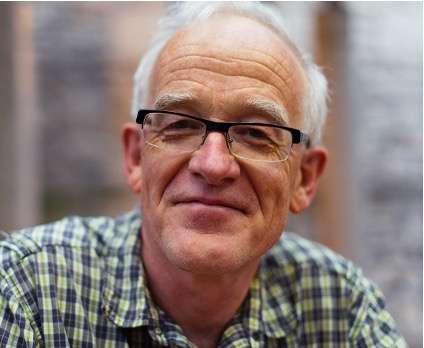
Jim Klaas has spent his career as cross-cultural worker in Latin America as well as an adult learning coach. He leads Mobile Discipleship (www.mobilediscipleship.org) a site which provides study materials for learners. You can try the Five Verbs of Learning course here, which helps deepen our learning and faith experience with Jesus. It takes 5 minutes a day for 40 days and we can interact together throughout the series.
He is a dedicated fiddle and Irish whistle player, likes to do linocut printing, enjoys bird watching and fixing things.
 Sensus Divinitatis