
REVIEW OF BOOK: Magnus Mfoafo-M’Carthy, Jeff Grischow, and Festus Moasun. Experiencing Disability Stigma in Ghana: Impact on Individuals and Caregivers. Lanham, Maryland: Lexington Books, 2024.
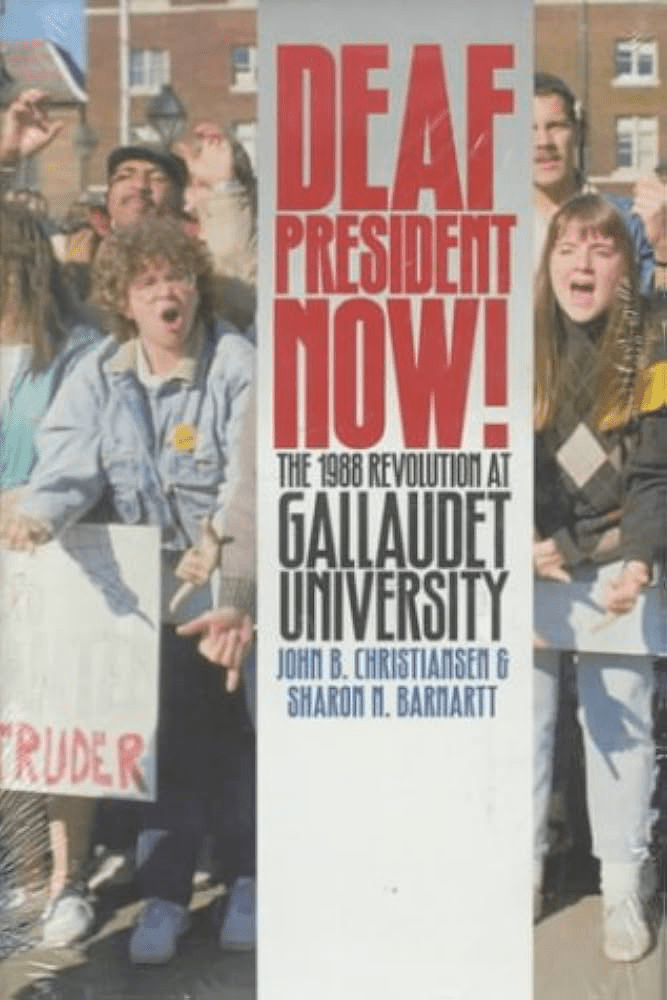
I post my review below just after having watched the film Deaf President Now! (documentary, 2025). It is an inspiring and enlightening story of 8 days in the life of Gallaudet University, Washington, D.C.–the world’s only university for the deaf. It documents a week when its students rose up, and took over the university buildings and locked the doors and gates in 1988. They were protesting the board’s hiring of a new president who could hear but who never worked with deaf persons, over against two other potential candidates who were deaf and understood the world of deaf people. The mostly clueless chair of the board, a rather regal looking wealthy Virginian woman, told the students that deaf people were not capable of leading a large institution. The clear prejudice against persons with a disability became a rallying cry for change. It is a riveting documentary looking back on those eight days through the eyes of the students most involved in the protest–now living as seniors.
Discrimination against the disabled is a global problem and so it is important to global scholars. I must add a disclaimer here: one of the authors of this book is one of my board members at Global Scholars Canada (Dr. M’foafo-M’Carthy). I’m reviewing the book because it fits so well with our global Christian mission and vision.
What I mean by that comment is that the book is an invitation to transnational cultural understanding. It deals with issues of colonialism, development, religion, culture, and government policy. It is a scholarly work of two Ghanaian-Canadian professors and their Canadian colleague Jeff Grischow, and it represents an international research project. I have written about brain drain in another blog, but this research provides an interesting mitigating factor: some of the most educated may leave African countries for Western institutions of higher education, but their research may give back to their country of origin and develop cross-cultural flows of research and resources. Brain drain can become brain gain.
This is not an explicitly Christian or even theological project, although it investigates aspects of religion that relate to disability in Ghana. Yet the authors are Christian and there is a certain Christian vision that is implicit in the book. Those who follow Jesus the Messiah ought to have some special concern for the stigmatized, as Jesus spent considerable time with prostitutes, tax collectors, and other ostracized persons. He also paid special attention to the sick, blind, and lame, often healing them, even if he did not heal all the sick in the Israel while he wandered from city to city. These activities were not marginal to his life and work, but to a large degree were the centre of it (see Luke 4:18).

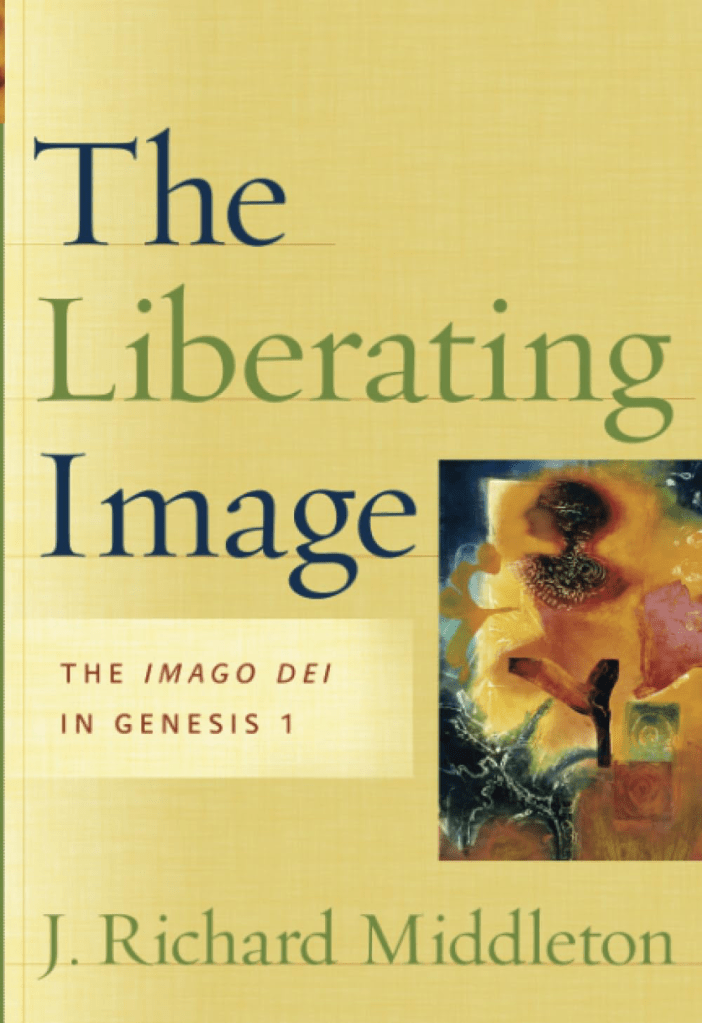
One of our other GSC scholars, Andrew Barron, has also written a book on disability—a personal theological reflection on his life with his son, Rafi, who lives with Down’s syndrome. Both books assume a dignity to human life regardless of ability, and much of that legacy comes from Judeo-Christian sources, especially the imago dei. (Another global scholar, Richard Middleton, has written a great book on this subject in The Liberating Image.)
Stigma as Stereotypes that Discriminate
This book is not easy to read because it is primarily the documentation of human suffering, and for the most part, the pain is caused by other human beings. The topic is disability in Ghana, but the focus is not on the physical stress caused by disease, injury, or congenital disorders; it is an investigation of the social stigma attached to disability and the resulting hurt and discrimination. In a nutshell, this is how stigma works: culture and language generate stereotypes of disability, which cultivates prejudice in people, which in turn is practised as discrimination that results in exclusion and limited access to cultural goods (6). Types of discrimination include name calling, being rendered ineligible as marriage partners, being stereotyped, disrespected, abused, socially excluded, and often being denied job opportunities. Finally, disabled people often internalize the negative public perceptions around them—what is called self-stigma, which results in self-sabotage and the cycle of stigmatization being further reinforced.
The research is covered in three parts: the context, the experience of disability, and the way forward. The largest section by far is the middle one—the interpretation of the interview data they collected in four regions around Ghana, both urban and rural.
The key to understanding the stigma attached to disability in Ghana is the colonial and religious history of the country. Precolonial Ghana ascribed disability to spiritual causes (as did Europe at the time) but tended to accept the disabled and care for their needs. The authors then elaborate on the influence of Ghanian proverbs and other sayings in creating and perpetuating stigma. Then the colonial period brought in a normative understanding of personhood that required some sort of utilitarian productivity of human life. Thus the expectation for the disabled was that they be rehabilitated so that they could become productive beings. These Eurocentric understandings blended with the traditional discourse on disability.
Disability and Religious Beliefs
Central to the book is the notion that stigma is culturally rooted, especially in language and indigenous belief systems. Traditional beliefs mix with colonial assumptions and Christian or Muslim theological tenets. One prominent belief is that those with mental illness, who are among the most stigmatized in society, have had their condition brought about by witchcraft. This seems to focus mostly on the perception of being cursed by someone who has a grievance against the family of the mentally ill. This comes with serious social consequences. As one woman said: “People say our family is cursed… and do not want anything to do with us” (55). Said another interviewee: “If you are a young boy and you marry a deaf woman, you will die or face misfortunes” (56). It can become a self-fulfilling prophesy, as stigma leads to discrimination and poorer social and economic outcomes.
Beyond African traditional religion, there is almost a fatalistic sense that disfigurement and mental illness must be God’s will. “What can I do?” asked one interviewee. “I only exercise patience and leave it to God” (109). Another states: “I know that blindness is given by God, and I cannot question God. Because that is how God said it should be” (108). It would be interesting to have teased out more clearly the animist or ancestral beliefs from the Islamic beliefs, and then the Christian beliefs as well. As it stands, which religion is the specific influence is not very clear, which may be exactly how it is in the culture at large.
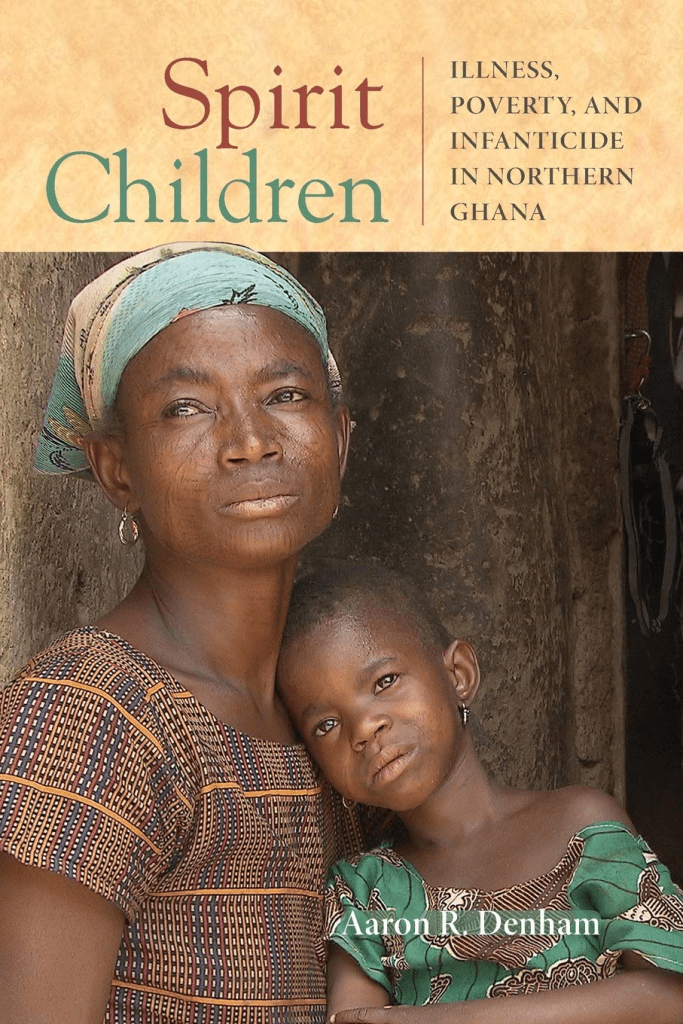
The stigma attached to disability can be extreme and result in violence. At first, I was shocked to learn that “research and anecdotal evidence suggest that across Ghana, many of these children are either directly killed or neglected to die” (44). This has been the specific focus of Aaron Denham’s book Spirit Children. But then it came to mind that in the West we may not kill children “born with a difference” as the text calls them, but we do screen for disability and certain undesirable genes in the womb and then at times terminate the life of these unborn children. If we read this research with a sense of our own complicity in the West, we may mitigate the tendency to cross-cultural judgment and lingering colonial attitudes toward African culture.
What is especially valuable in this book is its methodology. They took six years to interview 120 individuals and their caregivers, and so the book is spotted with paragraphs from the interviews. In this way, the lived experience of the disabled and their loved ones is revealed directly in the text. We read testimonies like: “You know, my sister is very beautiful, and she attracts lots of men, but whenever a man approaches her and realizes she is deaf, they withdraw” (100). There is much grief in the experience of the stigma attached to disability.
Another strength in the book is that it includes the perspectives of family members—not only the disabled persons themselves. It is important to note the extra burdens that caregivers bear, including carrying the stigma that falls upon the disabled. Some family members were not able to marry because suitors assumed that the disability may transfer to other family members, like some contagion.
Working the System?
One aspect of disability that I would find important to investigate but is not discussed here is how individuals may resist and even undermine the system of stigmatization and discrimination, and maybe even take advantage of it in some way. Some of my own research has been into the writings of sociologist Erving Goffman, who studied people living in modern institutions, like an asylum or prison, as well as others with a “spoiled identity” (his concept of stigma). Inside what he called a “total institution” he noticed patients doing “secondary adjustments”—unauthorized actions that allowed them to assert some individuality and so distance themselves from official expectations. “Whenever worlds are laid on, underlives develop,” he wrote. People can “make do” by using sanctioned objects in unintended ways, for example. While we are often given rigid social identities, a separate self can be formed that “resists the pull” of these givens and finds some freedom in the cracks of the system. As persons, we can reserve a part of ourselves apart from the institutions that shape and hold us.[1]
I don’t think this is necessarily an assertion of Western individualism. I would not say that it is easy or that even most people are regularly able to work the system, especially in a more collectivist culture. But it is a part of human agency and thus human dignity to carve spaces in our day and in our inner selves that no cultural system can fully control. I believe part of my conviction on this is partly spiritual—that there is always a presence greater than the social world that surrounds us, and thus some form of transcendence is always possible through our connection with the divine. Even in an asylum, prison, or concentration camp. For an analysis of the latter, see Victor Frankl’s Man’s Search for Meaning (1946) where he posits that even prisoners of war can choose their attitude toward their circumstance and turn inward to achieve some detached sense of self-transcendence. They can still find a depth of purpose and meaning, and they can still love, and this agency is an affirmation of human dignity, and I would add, God’s subtle presence within all human beings, further evidence of the imago dei.
Toward Advocacy
Part III of the book is brief and points towards some solutions. They point out that disability and poverty are intricately connected, as poverty is both a cause and consequence of disability. This can make poverty a “driving force” in generating some of the negative beliefs that form the stigma around disability. As noted, because these beliefs can lead to maltreatment, abandonment and even murder, it is vital that social agencies do all they can to address the discourse around disability and shift attitudes and culture. Otherwise the vicious circle of disability and poverty continues unabated.
The authors then point out the gap between constitutional protections for persons with disabilities and the lack of protection that such persons actually experience. Access to resources is limited, and flawed definitions of “poverty” in some legislation prevents the disabled from government benefits. Suggestions are made for change, and the authors advise that leveraging the grassroots efforts and provisions of families would be a good government strategy, as kinship relations have proven to be key for disabled persons.
There is an earlier section where support from institutionalized religion is highlighted. Interviewees spoke of being accepted in church and being given positions that improved their social status. Some were given gifts and financial support, and even visits from their pastor. “They were given the voice and the opportunity to speak on matters and to be leaders of groups in the church. These activities instill in them confidence and the ability to achieve their goals” (72). I think this is worth noting, and some comparison between mosques, churches, and other religious communities could be telling. Additionally, the religious beliefs that link witchcraft, cursing, and a fatalistic sense of God’s will need to be addressed—preferably by the religious communities themselves as well as the wider culture. Books, films, and other arts could be employed to shift cultural prejudices about disability.
Near the end the authors quote suggestions from The United Nations Children’s Fund (UNICEF) for combatting stigma. UNICEF suggests developing advocacy and leadership skills among the disabled and their families, encouraging them to talk openly about their experiences as stigmatized persons. They also suggest community-based sensitization programs, teaching people about the language they use around disability, and how they can show compassion rather than pity. I suspect they are imagining government programs, but this could apply to religious institutions, schools, sports, and other contexts as well.
The authors make suggestions for individuals at the very end. “Get to know at least one person with a disability,” they write. “Use appropriate and positive disability language,” they add. They also implore the reader to help those who are disabled with the resources they have, and to do this respectfully. They end with a call for introspection around our attitudes toward the disabled and invite the reader to “be an ally and stand with them as they advocate for their rights” (124).
Experiencing Disability Stigma in Ghana is an important window into the lived experience of disabled persons and their families in Ghana. The qualitative data that forms the core of the book makes it a richer investigation that would make a great textbook for students in international development, social work, or cross-cultural sociology. Educators, policymakers, and anyone who works with disabled persons would benefit from reading it. It has the potential to move the reader from pity and helplessness to a sense of collective responsibility and social activism that shifts beliefs and culture to see the dignity and potential of disabled persons.
[1] See Erving Goffman Asylums: Essays on the Social Situation of Mental Patients and Other Inmates. Anchor Books, 1961, p. 305. See also my own The Subversive Evangelical: The Ironic Charisma of an Irreligious Megachurch. McGill-Queen’s University Press, 2019, p. 75, 78, 83, 197. In fact, I used Goffman’s book Stigma (Prentice-Hall, 1963) and its notion of a “spoiled identity” as a key concept in my analysis of evangelical identity in Canada.
 Sensus Divinitatis