
“…When planted, it grows and becomes the largest of all garden plants, with such big branches that the birds can perch in its shade.” (Mark 4:32)
What does it mean to be a Christian scholar, and what does a Christian scholar need to flourish for God’s kingdom and the common good?
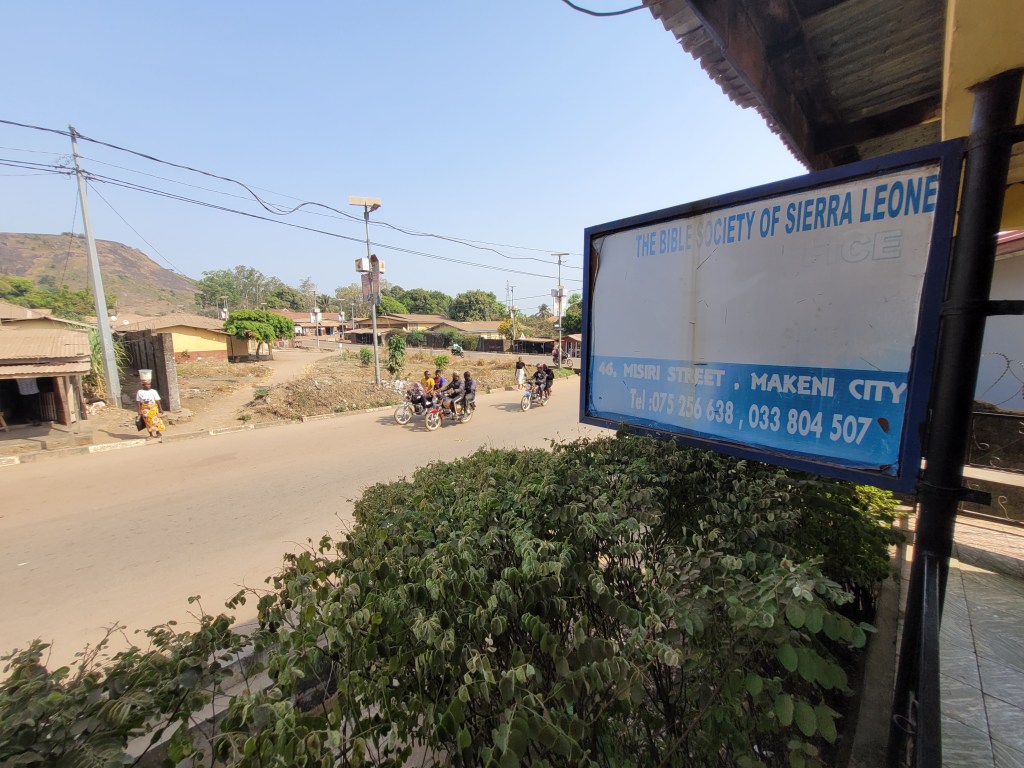
The town of Makeni is about 3 or 4 hours inland from the airport, which is near the capital of Freetown, Sierra Leone (West Africa).

I just flew into Sierra Leone, West Africa. On a hot humid Tuesday morning in the town of Makeni, we sat down with about 10 local students and scholars, plus eight more guests on-line, to discuss what a Society of Christian Scholars (SCS) chapter would look like in this Muslim majority country and begin steps toward starting a local chapter. People from various local universities were present, identifying with different denominations, and different ethnic groups of the country. Canadian Global Scholar Dr. Stephen Ney called the group together, and Dr. Osam Temple, Anglophone Africa Regional Representative for the Society of Christian Scholars, gave an inspiring call to those present from his location in the Middle East (although his home is Nigeria). We met in a room of the Bible Society of Sierra Leone, where two of those present work translating the ancient Greek into the Themne language.

Motorbikes are everywhere in Sierra Leone, and I saw up to five people on one bike, and even one with a passenger carrying a small chest freezer.
Dr. Ney opened with the end of Mark 4, where Jesus talks about how organic things begin as small seeds and eventually grow branches that bear shade and fruit for others. In this tropical country, the gift of shade and fruit are deeply valued, and for these scholars to see their education and vocation as shade and fruit rings true.
Dr. Temple then spoke, explaining, “There are many scholars who happen to be Christian but the two parts of their identity do not blend.” In other words, to be a Christian scholar takes a level of intention and commitment, as the integration of those two parts of our identity cannot happen passively. Christian scholars bear witness to their faith inside class and without, but they are also passionate about addressing the social, political, and economic issues of the day. “The university is the place of influential ideas,” he continued, and professors create and divest their ideas to students who in turn take them to the institutions that shape a culture, a country, and the world.

In a nutshell, a Christian scholar is a scholar who wills one thing: to live and work for Christ and his kingdom of love and light. That passion pertains to their teaching, researching, and community service.
Dr. Temple then elaborated on the work of SCS as it has spread across Africa in the last five years. He urged them not to under-estimate what a small group of determined people can do to be a redemptive influence in the university, especially when they come with the academic credentials and a passion for excellent scholarship. Even the Muslim majority and the growing secular regime will take note and make room when Christian scholars come to our work with integrity and insight.
“We feel alone,” said one of the students to me. I told him that a Christian Scholar is always part of a larger body, Jesus’ church. We need to make these connections.
Sorie walked into our meeting room, exclaiming he was a Christian and he was interested in what we were doing. He is an associate pastor in an AGC church, and lives in a war amputee camp (the maimed from the civil war earlier in the millennium). He also is a missionary to a Muslim village outside of town, and has a family with children.

Dr. Temple warned the students, however, saying “This is not a club, but a communal calling. Denominational disputes need to be laid aside, and while we can all offer beautiful words about what might be done, the proof will be in the actions that follow this meeting.” In effect, there are no individual Christian scholars; they are spiritually and socially part of a wider body, an academic fellowship with a mission.
When an idea catches on with many people from different locations, it becomes a movement. We see ourselves not just as part of local bodies, but international partners working toward the same ends. This is why we then heard from scholars in other countries who lead their national SCS chapters: from the Gambia, Niger, and Canada (myself).
The Gambian scholar is Andrew Mendy, an assistant professor at the University of The Gambia, who leads the SCS chapter in the Gambia. The Nigérien scholar spoke of his experience in a similar way.
My short contribution was to say that Christian scholars need six things: 1. Spiritual formation and pastor relationships (i.e. be part of a church); 2. A supportive family, household, or friendship circle that prays for you and perhaps sponsors you in some way; 3. Resources to ground you in the Biblical story and the Christian worldview; 4. Resources that suss out what the dominant worldviews and supporting mythologies of the day, whether Islamic, secular, tribal, or metamodern; 5. Help in discerning a research program that meets some need in the community, church or world; 6. Training in an effective pedagogy informed by your faith. To be sure, being a Christian academic can be intense!
I met Thomas Dawo, who teaches in Freetown, at the meeting described here. His graduate degree is in early childhood education, but he is also a missionary in his home country of Sierra Leone.
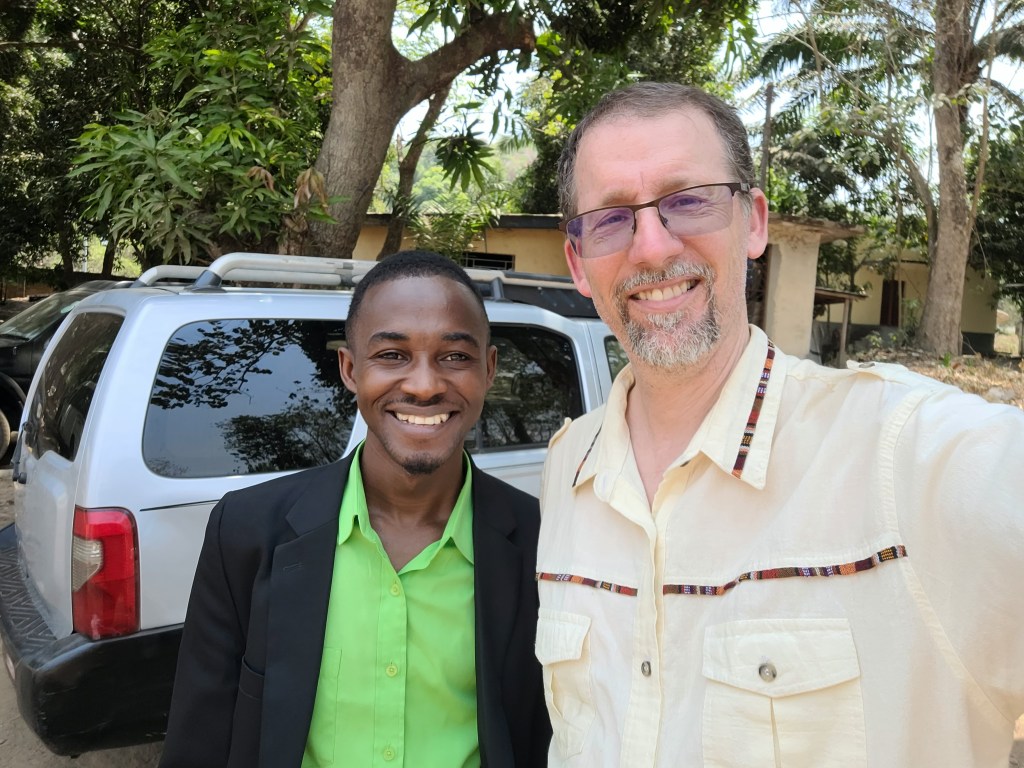
The group then discussed what they would like to do together, and they expressed a passion for witnessing to their students, meeting together to discuss common issues, and linking with the wider movement of SCS. We ended in communal prayer for the future of this group and lunch—fried chicken and rice with a cucumber.
What does it mean to see yourself as part of a movement? Movements are social networks that mobilize for a specific cause, and they are often the partnership of people from many different organizations. Participating in movements can generate a rush of excitement and even social status, because successful movements create social change. As Christians, we assume the transformation we seek is positive, leaning towards social justice, personal righteousness, and harmony with others and creation.
An academic social movement is like a guild with a broader vision than only disciplinary projects. It seeks to generate research, but also build friendships, mentor students, build the church, and bring about social change. The Society of Christian Scholars was just a seed a few years ago, an idea to link Christian scholars across the work for mentoring each other, publishing together, conferencing on important social issues, and strengthening God’s church for service in the world. Those branches are already reaching out only a few years later, and the fruit can already be seen, as those who felt alone now realize they are part of a global movement with local colleagues.

We visited the University of Mikeni, where Dr. Stephen teaches. It has a Roman Catholic identity, although many students are Muslim.
Dr. Ney and I in front of the welcome sign to the University. The motto of “faith, hope and love” emphasizes the character they seek to form in students.


Thank you for this meaningful post. It would be interesting to see you develop your six points on what Christian scholars need.
LikeLike
Are there specific challenges they face in building such a network, especially when collaborating internationally? It would be interesting to learn more about the practical steps or initiatives that have enabled this movement to thrive and how it impacts both local and global communities. Visit us Telkom University Jakarta
LikeLike