
“When he saw the crowds, he had compassion on them, because they were harassed and helpless, like sheep without a shepherd.” (Matthew 9:36)
It was homecoming weekend the past few days at the University of Guelph, and I live in its shadow. We heard sirens screaming all through the evening and late into the night. Our student boarder reported fights breaking out, screens being tossed out windows, students climbing apartment walls, alcohol abuse, emergency response teams pumping stomachs, and all round chaos. He showed us videos, including the arrival of SWAT teams with their pepper spray. We heard from the local clinic that our town’s hospital emergency room was clogged, and seriously ill adults could not get examined due to the overflow. They were turned away.
CBC reports: homecoming has become a policing event.

This is not what university life is supposed to be. Parents should not be getting phone calls in the wee hours of the morning from hospital officials or police officers, reporting on some tragic event in which their son or daughter was involved. A week earlier (and this was a high school party, not the local university), a student tragically died in what seems like a party that went out of control. You can read the obituary here. Nash Dunlop was a gifted athlete, and a good friend, and he is no longer with us.
We’ll see what the sirens meant this past weekend as the reports come out across the country. Here are 22 photos of the drinking, wall climbing, fighting, and yes, some genuine fun crowd activities, too at my local public university.
“That’s just one weekend!” you might say, and there is some truth to that. Although other occasions, like Halloween, St. Patrick’s Day, Fall Fair, etc, etc, show similar patterns. What I want to ask is this really important question: What is the university for? The photos look like they are being trained to be circus acts or maybe lifelong alcoholics. Is it truly only one weekend?
I attended a parents’ orientation session one recent September at a Christian college on a secular university campus–something not unusual in Canada. What shocked me was that the President never once mentioned the word “Christian,” let alone “Mennonite”, which was the historical foundation and remains the supporting community of the college (and its name!). He apologized that the students had been given free T-shirts that were all the same: “We do believe in diversity here,” he said. “We are not a community that seeks some sort of conformity.”
This seems to be an obvious example of what has been called mission drift. Universities began part of the Christian establishment in the West. Now there is a different establishment, and its orthodoxies are quite different, and in many ways, counter-productive to the age-old purposes of higher education.
Higher Education is Drowning
There is something deeply wrong taking place on university campuses today, and not just in the public university halls of power, where you expect such vacuous discourse on “diversity.” I am a champion of diversity, teaching World Religions for almost 20 years now, but “diversity” has ironically become a code word for a refusal to engage difference. This emptiness, including the tragic loss of a moral compass with transcendent tethers, has infected our Canadian university system and it is killing students, spiritually and sadly, physically, too.
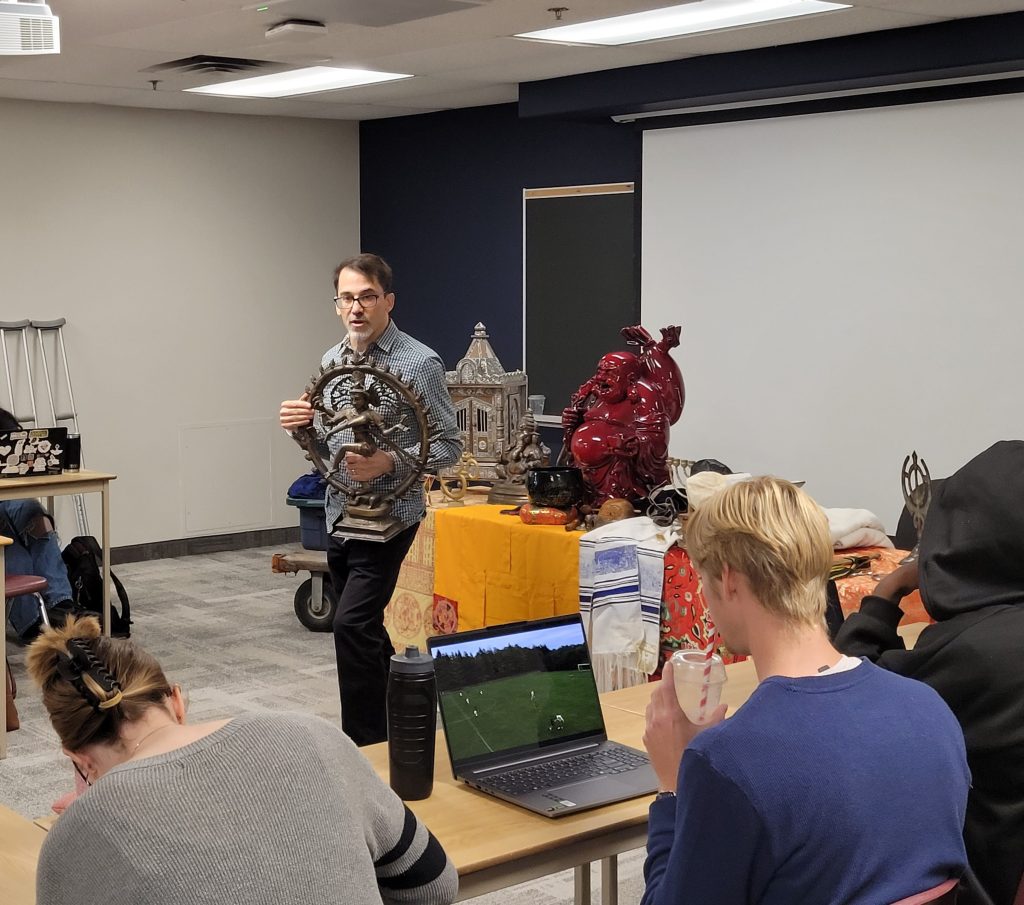
If there is anything academics ought to be rigorously critical about, it should be the university and its culture. I’m turning to American writers, but the infection has spread across the Western world. Seasoned scholars like Christian Smith have written scathing articles and books about the failures of academic systems today, including “Higher Education is Drowning in BS” and “Why I’m Done with Notre Dame.” Jonathan Haidt and Greg Lukianoff have highlighted the increasing therapeutic nature of education and the psychological frailty of students in their book The Coddling of the American Mind (2018). And then a little older, but still quite relevant is Anthony T. Kronman’s indictment entitled Education’s End: Why Our Colleges and Universities Have Given Up on the Meaning of Life (2007). In a secular, empirically bent education system, few classes even challenge students with the question “What is living for?”
I have written before about what one academic calls “shadow nihilism” in the university today, where a rampant consumerism, positivism, and anti-realism mix in a toxic soup of anti-humanism–and when you really think through the worldview beneath the culture, metaphysical despair. Few are actually teaching “There is no meaning in life, we are all biological accidents, love is mere chemistry and neurology, and someday the planet will melt in the detonation of the sun, so get what power you can and champion your own subjective dream.” No. And this is a big part of the problem. University authorities don’t think it all through. They are caught up in expedience, economic survival, and the race for higher enrolment and retention. Or publication and tenure. Besides, deep questions might cause conflict, and we Canadians especially do not want to create any situation in which offence may be taken. “Everyone has their own lived experience” is the new social science mantra. And it is a religious orientation, at heart!
What I’m reporting today is that this shadow nihilism doesn’t only show up in the classroom, the lab, and the president’s office. “Partying” (which can mean fun teenage dancing, or alcohol, drugs and debauchery) is a lifestyle, in fact, an expectation, for the student life outside the classroom. Anecdotally I was told about a local university student, who perhaps facetiously but nonetheless said (at the beginning of October last year): “We have to attend classes and study? I came here because I was told it was a good party school.”
The Office of a Student
Global Scholar David T. Koyzis’s book We Answer to Another: Authority, Office, and the Image of God (2014) explains how God has ordained that everyone, as a carrier of the divine image, has different levels and qualities of authority. Teachers have obvious pedagogical authority, but students, too, have a kind of authority that relates to their office as students. It is a God-commissioned responsibility that is not self-centred but other centred, and which includes attending and participating in class, asking questions, working with their peers, completing assignments and tests, and contributing to communal well-being of their educational institution. Students are being shaped for responsible leadership through their classes and extra-curricular activities.

This is the way university life is supposed to be. It is happening, I know. There are still spectacular professors, conscientious graduate student TAs, and dedicated students. But they are going against the tide of nihilistic forces. Academic faithfulness, for students and professors, has become an “outrageous idea.” To pursue wisdom for the sake of service in university? It seems lofty, irrelevant, or even impossible given the constraints in higher education today. Disguising the nihilism beneath is a thorough-going pragmatism, couched in organizational management.
All this, while the students continue “party.” Are they really having fun, or are they all just nervous, lonely, and trying to find friends and so they just go with the flow, hoping for the best?
I imagined for a moment obtaining a megaphone and standing on a platform above the pressing masses of intoxicated students, and pleading with them: “This is not what you have come to university to do. Please go back to your dorms, open your books, and study for your classes. We expect you to be leaders in society quite soon. Please begin the habits that will make you a responsible citizen of our country, institutions and neighbourhoods.”
In my day dream of such an intervention, I might add, “Enjoy the football game and other community building activities as well. Help make our school a hospitable learning community for everyone.” Maybe I would then say, “God help us all,” or something like that, to acknowledge a higher power that we can depend on, as we are all wandering pilgrims, trying to find our way through the various challenges of life.
This is poor pedagogy, I know. Formation happens through the habits of daily life, not in a 30 second speech, and that means what happens in the classrooms, the dorms, and the hallways of the campus over time is what truly counts. Let me add: also in the campus ministry groups, that offer an alternative metaphysic to the shadow nihilism of the day. I’ve been on the board of the local Guelph Campus Ministry, and I know of other groups offering students a spiritual tether and guide for their life. Another world is possible!
This is why I work for Global Scholars Canada.
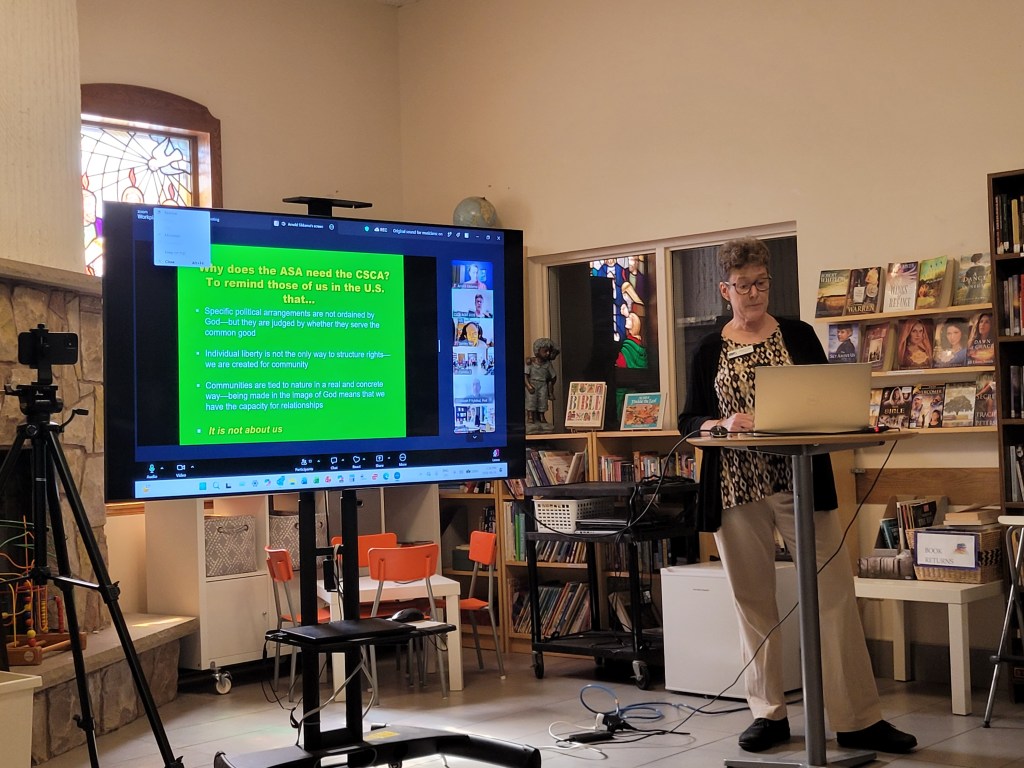
I was at a parent orientation at a different Christian university this past month. Here the president came to the podium, and the first thing he said was this: “Welcome to our university, where we direct all our learning and teaching to the Lordship of Jesus Christ.”
Well. That is a different metaphysic, and a different pedagogy. It has its liabilities, I know full well, but it bucks against the nihilistic trend with what is generally a gentle determination to love God and serve one’s neighbour through higher education.
Another story: a first year student from different public university was visiting the other day. “My roommate happens to be a real partier. I’m just not interested in that lifestyle. It seems stupid, and she comes into the dorm at all hours of the morning.”
Then she said, “I’m checking out the campus ministry groups.”
“Great,” I said. “Go where you find life, hope, and good friends.” And may she learn a lot about God’s world, in class and out, and discover through study and friendships what gifts she might develop to make his world a better place for all. That’s an educational blessing for all our students this new fall semester!
Note: Views on my blog arise in league with my work for Global Scholars Canada (GSC), where I am Executive Director. My writing here, however, does not represent the official position of GSC. GSC supports Canadian Christian scholars to redemptively influence academia and students, especially in underserved countries, for human flourishing and God’s mission. If you wish to support our work at GSC, you can donate at our page and designate it as “General Fund” and sign up for our quarterly newsletter. Thank you!


Good morning, Peter. Thanks for your wisdom here, which scares up a number of rabbits for me, as you can imagine. Years ago, Rev Bernie DeJong gave a talk at a Christian schools teachers convention in which he suggested we revisit Jesus’ question about stones and bread, like which of you would give a child a stone when they ask for bread. He asked, what if our children are drowning in bread when they are asking for stones, real enduring markers of what it means to live well, which will guide us through life. That has stayed with me because it so captures for me the crisis in education and which has inspired me to think about “religious literacy” and education as a spiritual exercise. In Canada we are quite skittish about religion, but it has left us without an enduring and authoritative narrative. “Sheep without a shepherd” comes to mind. Thanks again Leo
LikeLike