
Canada and Kenya have roughly the same population, but size-wise the land of Kenya could fit quite easily into the province of Manitoba. Canada sends wheat to Kenya, and Kenya sends coffee back. This past summer I went to Kenya to learn about its culture and history and meet with Christian scholar-leaders from around the world. It was my safari (from the Arabic, “journey”) and while it may have meant hunting animals for game in the past, it now means hunting animals for photographic purposes, and learning about conservation. A safari is a kind of seeking that includes a yearning for experiencing something new, a deeper appreciation for creation, and hopefully the desire for personal transformation in the journey.
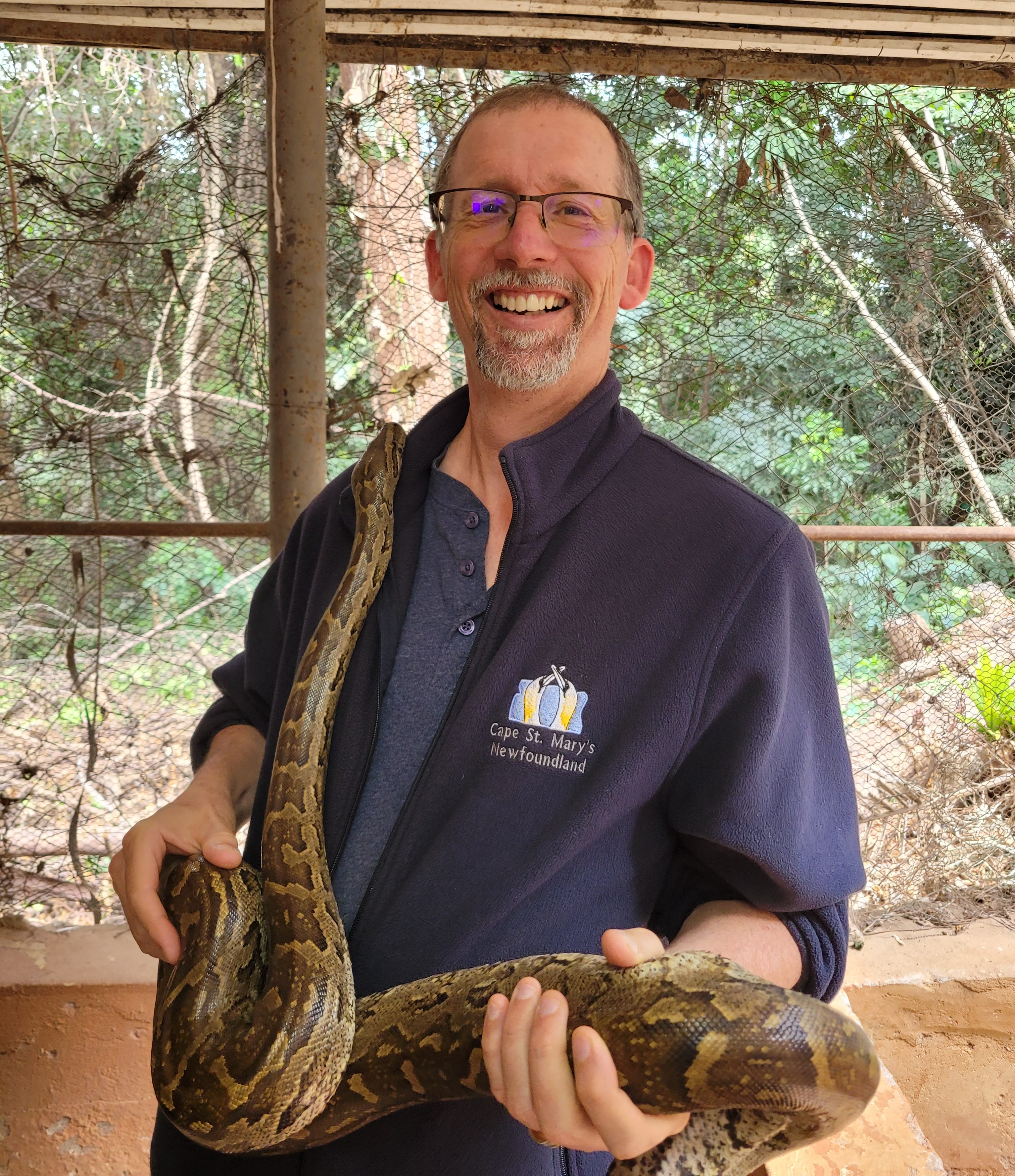
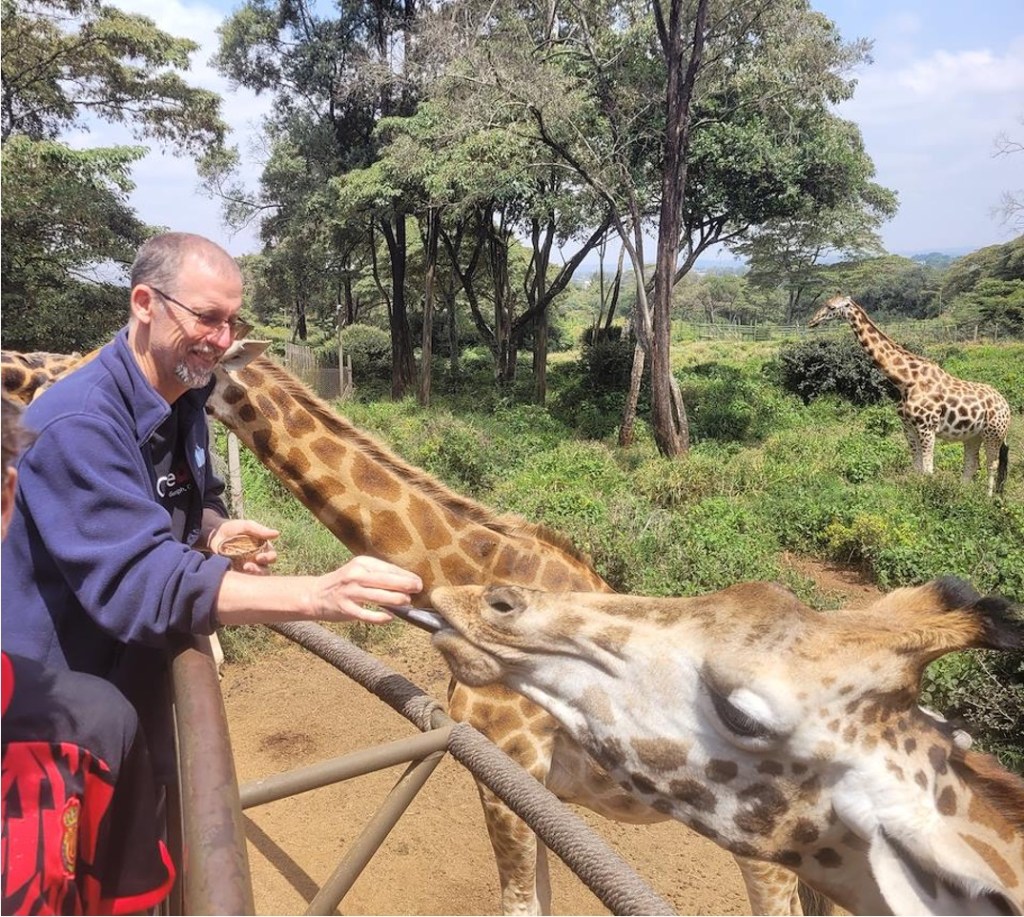
First let me say a few things about the host country to my safari. The Lonely Planet guide to Kenya says that “the vast majority of travellers in Kenya have come for one thing: animals.” It is one of the safari capitals of Africa and the country capitalizes on this with ubiquitous representations of giraffes, elephants, and lions. And yes, I did hand-feed a giraffe, held a python around my neck, and had a baboon chase me. Kenya is a world of exotic animals, although I learned most of them do not like snakes of any sort.
Stereotypes, however, can misrepresent the diversity of the whole. I’m glad I packed my book Factfulness along, which taught me the perils of the simplistic developed/developing binary, and opened me to see a wider spectrum of poverty and prosperity in Africa. He talks about development on four levels, each of which exists in most countries. Yes, things are bad, says the author Hans Rosling; but things are much better than they used to be for the vast majority of people on this planet. Kenya included, even with its history of colonization, violent transition to independence, and its current travel warnings. People I saw all seemed to have adequate clothes, food, and transportation. But the infrastructure was severely lacking, and if China had not built a new highway, mobility would be severely impaired in Nairobi.
Moreover, I did not see a single traffic light as I explored around the sprawling city. With the help of a driver guide, I visited the downtown National Museum, a railway museum, and visited a coffee and then a tea plantation in the hills. Together with all the conference goers, I went on a safari in the local National Park. I wanted to get a sense for our conference context, and for the context of our colleagues in East Africa.

The travel advisory from the Canadian government for Kenya is quite shocking: it begins at the top with the sentence “Exercise a high degree of caution in Kenya due to the threat of terrorism and a high crime rate.” The strongest warnings are for the north country, near Somalia, South Sudan, and Ethiopia. But there are also warnings to “avoid all non-essential travel” in sections of Nairobi, the capital where I resided for my two-week visit. In fact, we were swarmed and robbed on one downtown trip to buy souvenirs. One colleague in particular was swiftly relieved of a gold necklace, but none of us were seriously hurt.
The travel guide admits Kenya is “gruff” and “gritty” with a “rough underside” but is also “the vibrant, multicultural epicenter of one of the most interesting countries in the world.” It further states that Kenya has “some of the best places to spoil yourself in the world.” I visited one of its gated and guarded malls, and so the social inequalities of the country are quite visible. But such divisions are not just found in Africa. With these experiences framing my travel, the conference began at a Bible conference centre in the suburbs of Nairobi.
The First Ever Society of Christian Scholars Global Conference
The leaders of the Society of Christian Scholars met for the first time in person here. About 50 of us met under the theme of “Christian Scholarship for a Flourishing World: Calling, Connection, and Community.” Our goals were to evaluate our mission, align our leadership, strengthen our unified vision, enhance our capacity for scholarship, and to determine strategic priorities for the future. It was a grand agenda for our small group, led by our African hosts, our conference chair Orville Plummer (Jamaica), our global ambassador Dr. Osam Temple (Nigeria), and facilitated by program chair Dr. Jesudas Athyal (India).
How can scholars from such divergent academic safaris share a common mission? Issues like globalization and colonization, language and race, and not to mention professional jealousies must divide us in horrible ways. How can there be unity in such diversity?
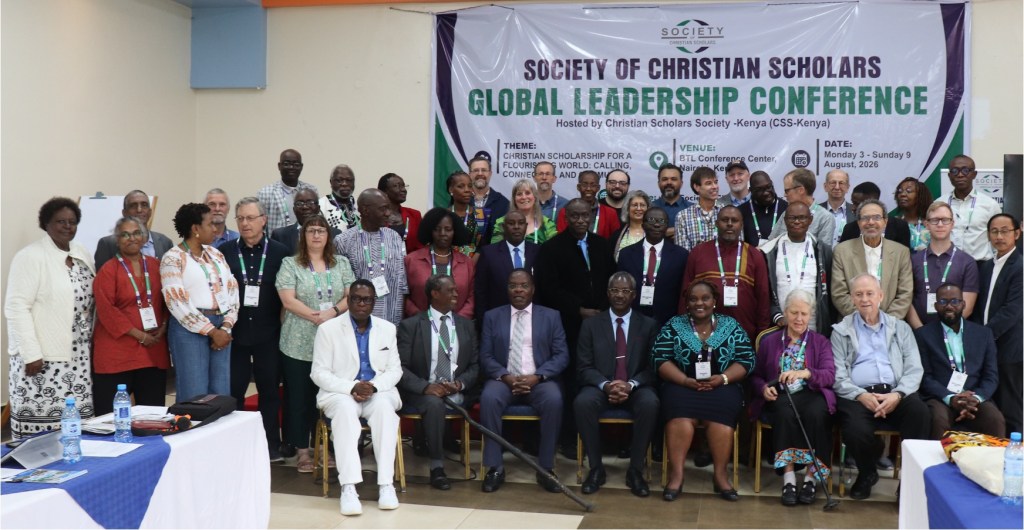
Harambee. This is Kenya’s official national motto, meaning “pull together” in Swahili. It reaches out to the “Ubuntu” idea (“I am because we are”) made popular by South African Archbishop Tutu, and if I may be so bold, has echoes in the Dutch notion of gezelligheid (coziness, conviviality, warm togetherness) and maybe even the Canadian ambition of multiculturalism. Ultimately, there was a Holy Spirit that brought us together under a common desire: to be faithful in our academic callings.
This unity was one of the great achievements of our time together. We arrived from 23 different countries, and we spoke different languages (most had some working ability in English). Some colleagues came from countries that restricted their religious freedom in a way that meant we could not post any photos of them. Whether secular communist or secular capitalist, Muslim-dominated or Catholic-dominated, we all have cultural dynamics to navigate that make our work as Christian scholars precarious, and we need each other. We formed a deep sense of instant solidarity, realizing we all want to bring our Christian faith to bear in a pluralistic context that often does not appreciate the value of our work.
Founder of Global Scholars (USA), Danny McCain (University of Jos, Nigeria), spoke of the calling of a Christian scholar. This demands the combination of spiritual soundness, professional training and competence, moral integrity and good character, and a comprehensive worldview that covers “all things” in heaven and earth. Similarly, Rolex Cailing from The Philippines spoke of the “5 Attributes of the Christian Scholar”–the integration of faith and scholarship, spiritual formation, interacting with cultures and society, vocational excellence, and relational and leader development. This is not meant to be triumphalistic, either. In a separate devotion on Romans 8:26 he reminded us all of our often desperate academic existence, with our failed grants, vacuous student looks, department politics, and tenure pressures: “we need to acknowledge our weakness, not project competence, for the Spirit will be our best counsellor.”
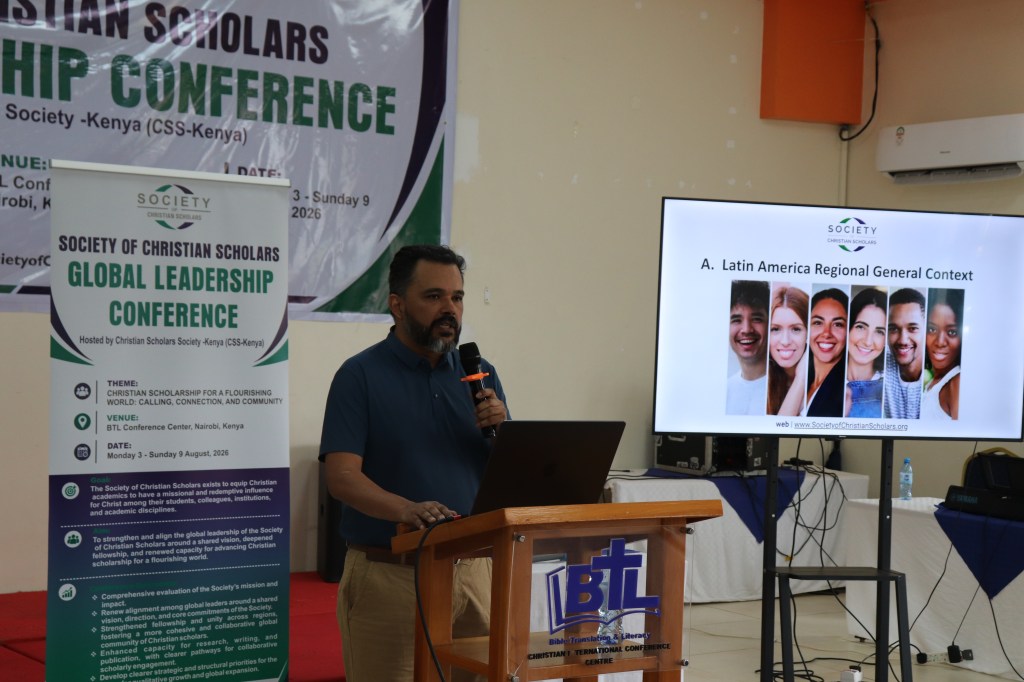
We also admitted to each other that as much as we love and serve the church, the church does not always understand us. The public or state university sees us as a freak or a threat that is too religious, and the church sees us as too intellectual, too critical, or too marginal to its own institutional goals. “My church does not support me in my academic calling,” said one young colleague from South America. “I feel alone when I go to the university.” This kind of institutional alienation characterizes our life, and some of us have resigned ourselves to the image of the lone Christian scholar. But the Society of Christian Scholars is a community of like-minded intellectuals with the same mission: to bear witness in the halls of the academy, to share the truth and beauty of the Christian faith for all disciplines, and to raise up a generation of Christian scholars who will take up the torch and carry it further and deeper into university life. Together, we in the Society “get it” like few other groups do.
Strategic, Academic Mission
Local African Bishop Calisto Odebe told us: “Universities shape the ideas that shape the world. Students becomes the teachers, judges, preachers, public servants, and business leaders of society. This forms the imagination of nations, their cultures, and civilization itself. Christians serve the public good when they inhabit the intellectual life, and it is a sacred calling for the common good and global flourishing.”
So Christians need to boldly go where youth are being discipled to Islam, capitalism, communism, and other ideological idols, and call people out to serve the Creator and Redeemer of the entire planet and all things within it, for the flourishing of all. The most real and true and good thing in the world is the Kingdom of God, restored by Jesus Christ, and this mission is entrusted to the church and all those who would profess to follow Jesus. The university is God’s idea, for there we study God’s world in its entirety.
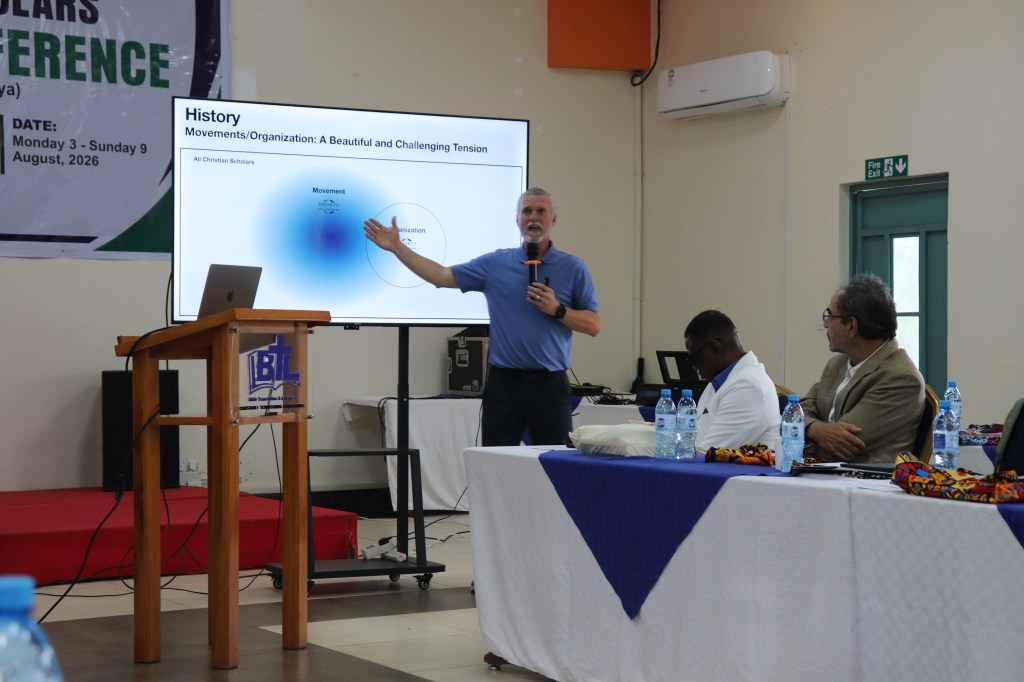
“Christian scholars must bridge the divide between faith and scholarship,” said Dr. Bishop David Oginde, one of our African plenary speakers. He spoke of the challenges of compartmentalization, epistemology, ethics, isolation, and diminished apologetics. “Christianity is not anti-intellectualism,” he insisted. “It ministers to the soul and challenges the mind.” When faith and reason become divided, “the divide diminishes both,” he explained. “Faith loses its application, and scholarship loses its moral foundation.”
At this conference we spoke at length about what it means to network across borders and boundaries, and to collaborate in research, and to mentor graduate students so they catch the vision for Christian witness in the universities of the world. We brainstormed of ways to establish Christian research centres, to publish top quality scholarship infused with Christian worldview, and how to teach so that we disrupt the dominant ideologies while winsomely offer a window into a kingdom perspective for life and society.
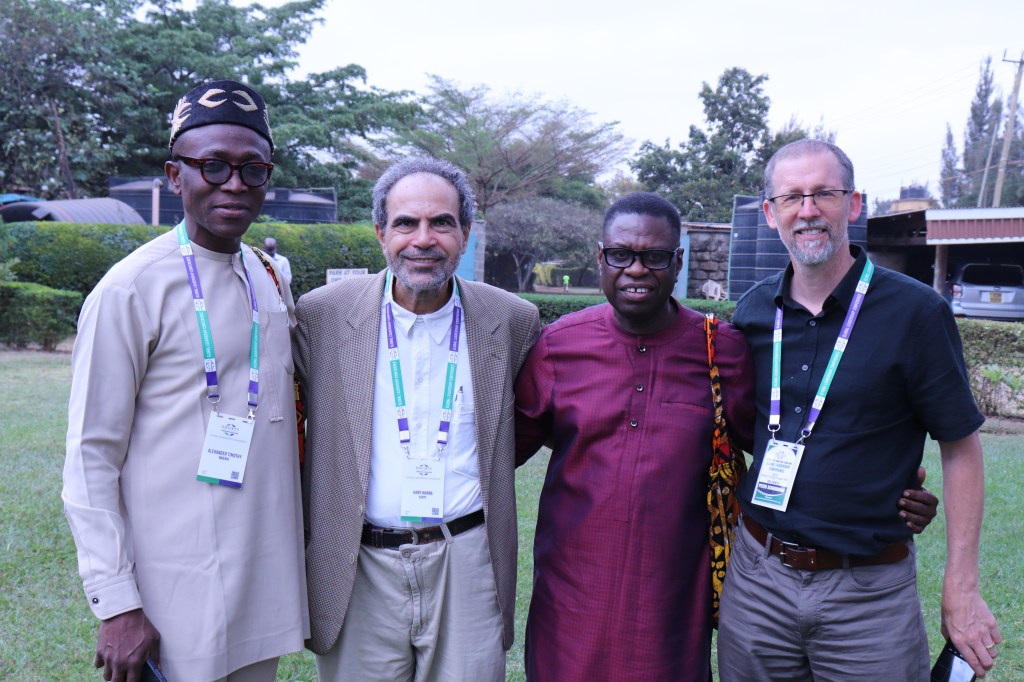
We are an interdisciplinary network—art, business, science, humanities, and social work. Yet these multi-disciplinary endeavours require a solid understanding of the Biblical worldview—meaning that we need help to ground ourselves in a full-orbed understanding of how our faith inspires scholarship in every research area. So we need Biblical scholars and theologians like Richard Middleton to speak into our work, and Christian philosophers Alvin Plantinga to publish guides to robust Christian principles for different disciplinary activity, exposing the secular presuppositions that mis-direct teaching and research. Christian universities and seminaries can be our partners in Christian scholarship and teaching.
This is grand mission with global aspirations, and it will take lots of resources and a long-term vision that can work across geographical and cultural barriers. It is really an impossible dream, humanly speaking. The logistical obstacles seem so vast and varied. So we pray, and get back to our work.
Scholarship is Worship
I suspect Western academic hosts would have been unlikely to plan what happened at our last official meal Friday night at the retreat centre. Here we are, Christian scholars from around the world, sitting at picnic tables with nice red tablecloths, special BBQ meats, and milkshakes. Then we were led by a Kenya worship team in singing and dancing with worship songs from across the country of Kenya. It was wonderful: all these intellectual university professors shaking their bodies and raising their hands because of one thing–the grace of God in our lives through Jesus, the one who brought us together in Africa.
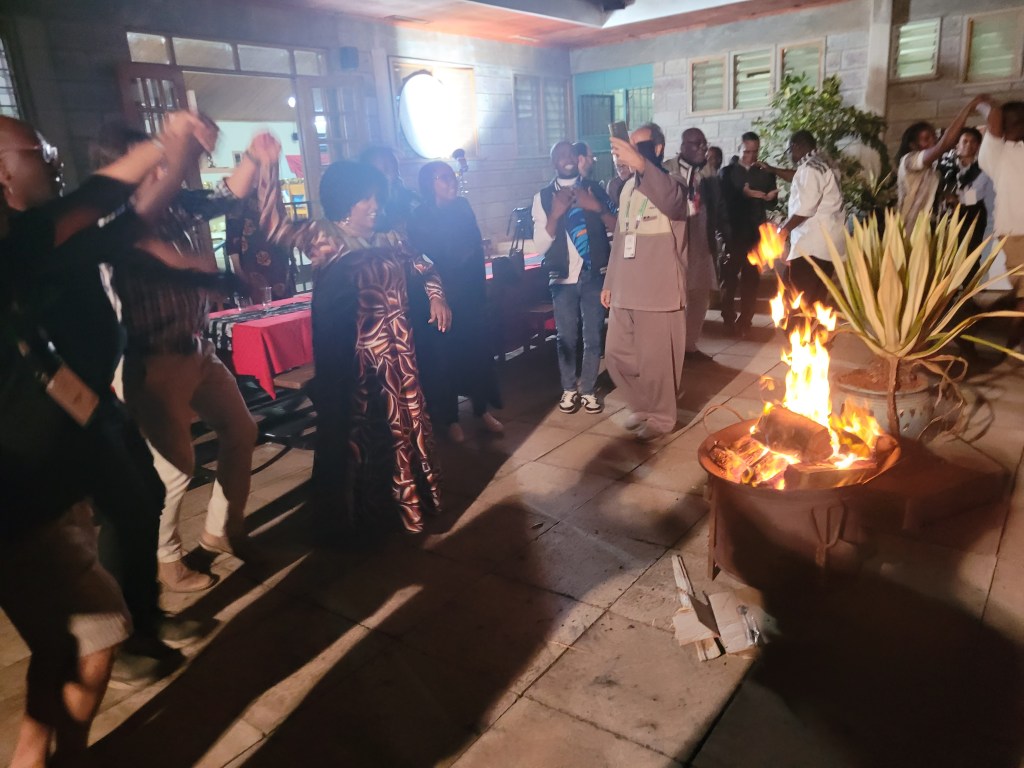
You need to imagine the sight: men and women, black and white, from Argentina to America, from Canada to China, and from Germany to Jamaica, doing something like a Conga line and singing with all their heart a new song: “Jesus came down from heaven to Israel, but then he came to Africa, and we praise him in an African way.” We shared our love for each other, clasping hands, dancing together, and laughing and shouting. Some might say it was undignified, but maybe there was an image of God displayed here not present in what we most often call “dignified.”
If I can keep only one memory of this week alive, I would wish it to be this one. This is one to recall to mind again and again—an image of the gift of Christian mavericks and hermits, dancing like drunk on wine (but there was no alcohol present). Something deep in this spoke to me—something that could be healing for my Western cognitively-bent soul, and the reflexive distancing I do so easily as a sociologist and intellectual. Life, love and faith are not abstractions—they are not transactions. They are gifts that hold much joy if it is not clamped down and dampened. This inspired me to recall our Global Scholar Canada’s list of core values, and especially value #5 which says we aim to be both “academic and unpretentious.” If the kingdom of God belongs to children, as Jesus said, there is something in the attitude of a child that the Christian intellectual needs to tap into regularly.
The Kenyan saying, hakunda matata, a saying made famous in the Lion King movie, means “no worries.” We made some cross-Atlantic cultural connections at the conference with the Jamaican “no problem, mahn.” The idea of a relaxed resilience—one that lets go of stress and the constant striving characteristic of the Protestant work ethic—is one we in the West might learn much from, especially if it is grounded in a confidence in God’s care and abundance. In this article, majority world theologians contrast Western managerial inclinations that “have little room for the Spirit to disrupt things” with a Majority World spontaneity that leads to costly mismanagement. We have much to learn from each other, no matter where we come from on this planet.
We are a group of dedicated eternal students seeking cross-cultural and transnational connections to further Christ’s call in university halls, labs and libraries around the world. This Society of Christian Scholars is an impossibly ambitious Christian dream, but one that is worthy of a global God with a global kingdom, and this Kenyan experience is just one small window into what this might yet become.


Hi Peter,
Thank you for sharing your experience in this incredible diverse creation and see how God uses Christian Scholars to help us appreciate this. May thee Lord bless you work and let you give glory to His Holy name.
Martin; Wilma
LikeLike