
A Book Review of Christopher Beha’s book Why I am Not an Atheist
First Published as a much shorter review in Christian Courier. See my previous blog on atheism here.
“I don’t believe in God, but I miss him.”
- Writer Julian Barnes, first lines of Nothing to be Frightened Of (2008)
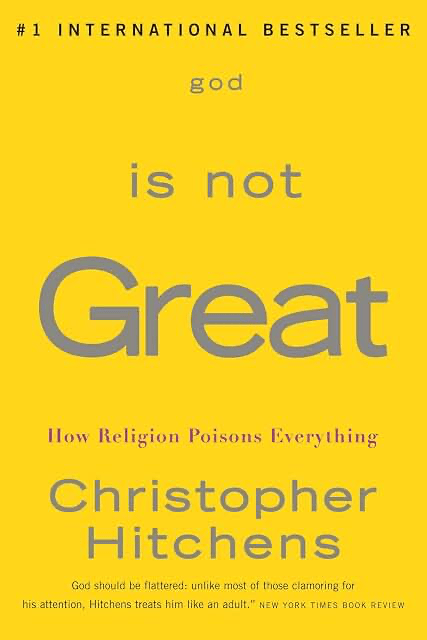
After 9/11, a spat of “new atheist” books made the bestseller lists, claiming that God was a delusion and that “religion poisons everything.” Large swathes of these pages were more ridicule than argument, and very little engaged the best Christian thought through the ages (or the most thorough atheist paradigms, which ought to engage some honest nihilism).
There were some very good retorts from Christians (and Marxist literary critic Terry Eagleton) but the credibility of Christianity has been undermined by other less intellectual issues. A long string of Christian leaders caught in sexual scandal, plus the rise of Christian nationalism in the USA, spiralled many into “deconstructing” their Christian faith (see my co-authored book Blessed are the Undone for details). Fifty years of church decline in North America put Christianity as a minority faith in Canada for the first time since Confederation (44 percent in 2025). Covid didn’t help, pressing populations into isolation on Sunday morning. Social media has been shown to be toxic, and an anxious generation has been born. “Polarization” was the word of the year last year, and the church has not been spared the experience.
The prospects for faith in Jesus Christ looked bleak in North America, even if a deep love for Jesus is exploding in the Global South.
Revival?
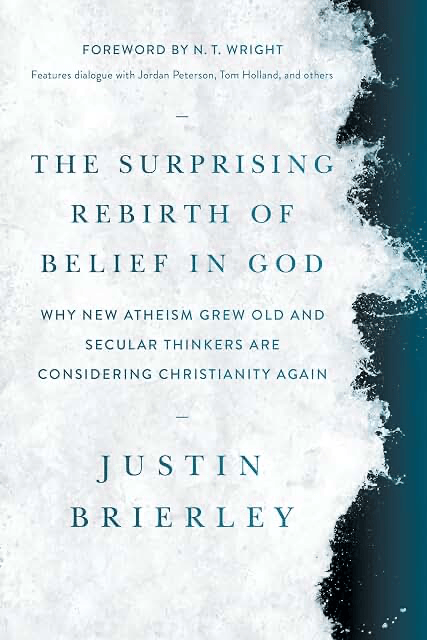
Not so fast. News headlines in the last two years started talking about people returning to church, and a few risked using the term “revival.” A fresh wave of books appeared promising the tide is turning—like The Surprising Rebirth of Belief in God: Why New Atheism Grew Old and Secular Thinkers are Considering Christianity Again by Justin Brierley (Tyndale 2023). He sees the immense popularity of people like Canadian Jordan Peterson as evidence of a longing for meaning grounded in God. Then New York Times religion columnist Ross Douthat released Believe: Why Everyone Should be Religious (Zondervan 2025). He investigates much of modern science, like quantum theory, and sees signals of divine presence clearly lighting up the cosmos.
Then there have been a spat of very prominent public conversions, like Tom Holland, Paul Kingsnorth, and Ayaan Hirsi Ali. Now a Texas politician named James Talarico is invoking theology in his campaign for a seat in Senate, and it seems like even the Democrats are getting religion. That’s something we haven’t heard in quite a while.
Here is an interesting take: Christian writer Daniel Taylor’s book Believing Again (Cascade 2025) writes about Leavers and Returners. In-between the two are what he calls Yearners, those who “live in the borderlands between fully committed faith and disbelief… They want more belief, more faith, more of God than they have, but obstacles stand in the way—some external, some internal.”
Beha’s Testimony
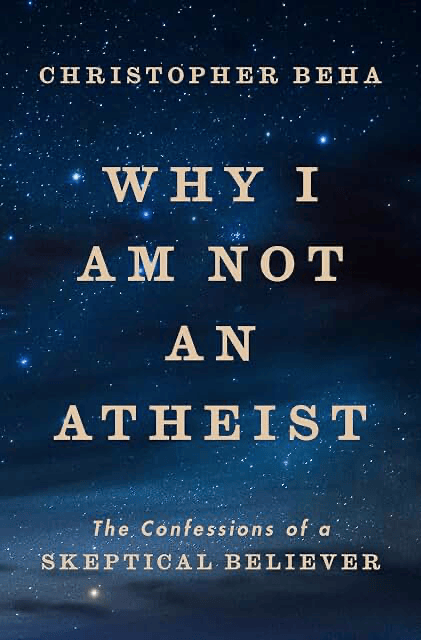
Christopher Beha’s book Why I am Not an Atheist (Penguin 2026) is the testimony of a Yearner. The former editor of Harper’s Magazine writes about growing up Catholic, turning to atheism, and then adding himself to the growing list of Returners. He begins with the startling sentence: “When I was fifteen years old, an angel of God came to me in the night, pinned me to my bed, and demanded that I trust in the Lord.”
The former editor of Harper’s Magazine claims that the angels’ visits were “unmistakeably real,” but still something happened to his faith along the way to adulthood. He chanced upon Bertrand Russel’s famous book Why I am Not a Christian (1957) and was deeply impressed with the two basic arguments—that religion lacks evidence and causes untold misery.
Sometimes sensitive young people can be too easily impressed with the kind of folks who tout reason as their guide and scorn religious texts as the equivalent of fairy tales. Science looms as a supreme and singular authority that most clergy can’t contend with.
Not totally unrelated to his skepticism, his university years he characterizes as a mix of depression, drugs, alcohol. “My few romantic relationships were unhappy and short-lived,” he writes. Instead, “I spent much time during my twenties and early thirties contemplating suicide.” He wanted to be a great writer and he sacrificed much of ordinary human interaction to enter into the true bleakness of his atheism. The visits from angels were medically diagnosable as “sleep paralysis” his newly shielded self told himself. There is no call from beyond, only the internal world of his psyche acting up. The malaise of disenchantment took over.
Philosophy’s Failure
Yet something happened over the decades that followed that caused him to write a book with this bold title. Beha is an impressively brilliant writer, but the book is somewhat of a paradox. He spends 304 pages of his book surveying dozens of philosophers but concludes that philosophy doesn’t answer any of our questions. Philosophy does remind us not to be bewitched by our arguments, but reason has its limits.
This is a rather long excursus from what seems to be the compelling story to me. The first 37 pages of the “prelude” are wonderful biographical writing that testifies to his loss of faith and his embrace of a profound skepticism. He draws the reader into his struggle with cancer, the near-death experience of his brother, and his need to become a great writer. But he turns from his absorbing personal narrative to hundreds of pages of (succinct and accessible) academic reviews (sadly with no reference to the profoundly influential American Reformed philosophers like Wolterstorff, Plantinga, or Smith! I suppose they don’t fall within his Catholic scope of vision.)
Don’t get me wrong: what he does in those 304 pages is important: he divides all atheism into two camps—the scientific materialists and the romantic idealists, and goes into brilliant detail, reviewing Descartes, Hume, Locke and the New Atheists, for the former, and then Spinoza, Kant, Schopenhauer, and Nietzsche, and many more besides for the latter. The first camp pursues the objective world, reducing all things to matter, discounting the personal perspective. The second camp is preoccupied with our subjective world, reducing all things to products of our minds, and conceding each to create his own individualist “reality.”
Beha takes 155 pages to show that the first is both “unethical” (without a good and evil) and “unlivable” as it makes no room for human consciousness or agency. He then takes 149 pages to demonstrate that the latter, where we are all left to create our own meanings, which leads to anxiety, the narcissistic display culture of social media, and its endless disputes without any common reference point to which we can appeal. “It is making us miserable in part by encouraging us to deny the reality of other people. It is making us miserable by making us feel alone.”
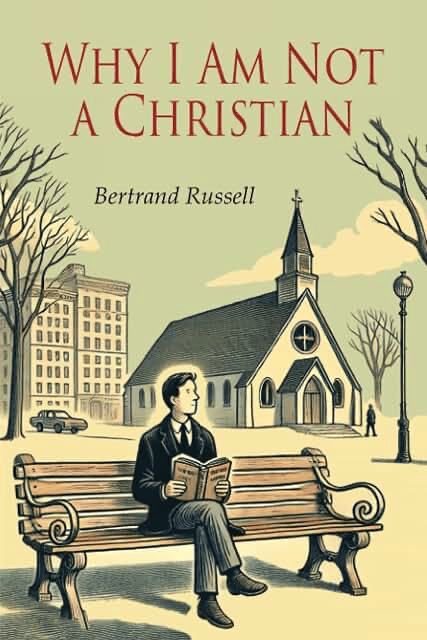
My one big complaint is he could have done this is fewer pages. Bertrand Russell’s original Why I am Not a Christian was about 208 pages all told (Unwin Press). Beha’s book is twice that volume. On the surface, that doesn’t lend more credence to his perspective. Simpler would have been better, except for the philosophical keeners among us. The one thought that makes this long excursus meaningful is that it symbolizes the long hiatus he had from faith, along with its frustrated and perhaps futile character.
Love has its Reasons
It is his “postlude” that offers the reader most directly what the book cover’s title promises. He returns to his autobiographical style and talks about being depressed after publishing his first novel, and his ideations of suicide. He was in a pit of despair, which is the true end of a nihilistic metaphysics. His family, he says, helped him move from “neurotic misery to ordinary unhappiness. That’s where I imagined I would stay for the rest of my life.” Another romantic relationship crumbled, and he dedicated himself to drinking excessively and “entirely to the creation of my own meaning.” “Life is suffering,” he told himself and “there is no way out.”
At this point, where he seems least open to any hope, a friend introduces him to female friend. “Everything changed that night” he writes. “Almost immediately I felt something coming back to life in me that I’d thought way gone forever.” She was right for him and he wanted to spend every moment with her.
Purely “by accident,” he says, he wandered out of the cave and into the sunlight. He quit drinking and got married. “It is not just that I was happy but that this happiness was not of my own making.” “The overwhelming feeling in those days was not despair, but gratitude” he testifies, gratitude “toward the world that had brought us together.”
This book, he realizes, is a battle against skepticism, which he defines as “someone who refuses to get taken in.” Skepticism is a constantly debunking, a refusal to take things on faith.
Swept Up in Love
Beha got suddenly swept up in a world beyond himself, a world of love. It was not his own creation, but a gift. “I had no framework for this gratitude,” he writes. Love as an unprovable foundation replaces the materialist option while acknowledging the reality of the physical world. In other words, it is the antidote to both the objectivist and subjectivist errors. Love assumes we have bodies in time and space that will eventually die, and so we have limits. It also denies that we are alone in our own “reality” as it reaches out to known and be known by the reality of other people. We belong and believe with others. Love brings the objective and subjective worlds together.
Beha and his new wife start to go to church together, and Beha eventually lands in a Roman Catholic church. There he learns “God is love” and “when we love, God becomes a part of us.” He then realized: the thing that had brought surprising joy and meaning to his life was the very thing he had been running away from since teenagerhood. “I had thought that once I’d faced down death without God, I could never possibly have need of him again. It turned out that the thing I couldn’t face without God was love.”

To show the connection between love and God he turns to the Christian mystics, and specifically Julian of Norwich and Teresa of Avila, with a brief plunge into Flannery O’Connor. Mystics focus on experience, and often struggle with religious institutions and tradition. He then notes that his 304 pages of philosophical investigation were all about the ideas of males, and mostly white males at that. He then recognizes “how many of the great spiritual examples I’ve had in my life have been women.”
Questions Remain
The profound irony of all of this is that his wife remains an atheist. She was the catalyst of his re-conversion, but not his partner in it.
Again, those 304 pages of wrestling with philosophy come up short: he learns in church that “I wasn’t going to figure everything out, that certain things would remain always mysterious, that my greatest problems could be solved only through love. Perhaps most important, I was told to stop worrying so much over the riddle of my own existence and to try and serve others.”
We should not imagine Beha as a deeply devout believer, encased in a new certainty. He confesses: “To this day, I consider myself a skeptic, and in this sense I can claim agnosticism.” (28) The battle seems to continue. And what about those tough Roman Catholic doctrines? Does he believe in transubstantiation? The best he can muster is: “Sometimes I do.” (388) We may certainly sympathize.
The ten years since his re-conversion have been “the most difficult of my life” but also “by far the happiest.” The book is dedicated to his two kids, Olive and Henry, of whom he says, “have taught me, more than anything else could have, the meaning of creation through love.”
Christians will recognize many things in this book: the priority of faith over reason, the gift of grace, and the importance of love and family. Some may be uncomfortable with his mysticism, but frankly, I’m just glad to read a book about the deconstruction of atheism rather than of Christian faith. Deconstruction should be an equal opportunity employer.
In the last sentences he turns back to the angel visitations of his youth, saying he can see them both ways. Science may explain the material cause, but it cannot explain why it happened, the mental images they provoked, or the meaning of these night terrors. That a physical experience caused a mental response is a miracle. And that a mental experience then unfolded the life experience narrated in this memoir is another miracle. All of life is a miracle.
Note: Views on my blog arise in league with my work for Global Scholars Canada (GSC), where I am Executive Director. My writing here, however, does not represent the official position of GSC. GSC supports Canadian Christian scholars to redemptively influence academia and students, especially in underserved countries, for human flourishing and God’s mission. If you wish to support our work at GSC, you can donate at our page and designate it as “General Fund” and sign up for our quarterly newsletter. Thank you!

