
“A little learning is a dangerous thing” said Alexander Pope. If you hear one good speaker, watch one arresting documentary, or read one convincing book–well, you still have only encountered one opinion, one angle, one source. Any student will tell you that when they write a paper for a class, they have to cite at least five or more references. Consulting only one source–only one perspective, is like imbibing only one news channel: a tribal activity, and a dangerous thing.
A good book, like good art, will always point outside itself. It will include something of both the brutality and beauty of God’s world.
Education is a fundamental human right according to United Nations, but sociologically speaking, it is a privilege of the class that has the time, money, and parental encouragement to absorb the costs of going to school. Especially higher education. I used to comb the garbage bins around university dorms at the end of the winter semester because I knew some students had no clue to the value of money or material goods. Sweaters, leather purses, microwaves–all just dumped because some students have money to burn. As campus ministers, we would collect goods for the thrift store from piles of goods students left behind.
To be sure, there are also students working three jobs to make ends meet, and especially international students! They know it is a privilege to learn, and have given up home, language, family, and culture to enrol in some training that they can use to better their life and often their family’s life.
What is a Good Education?
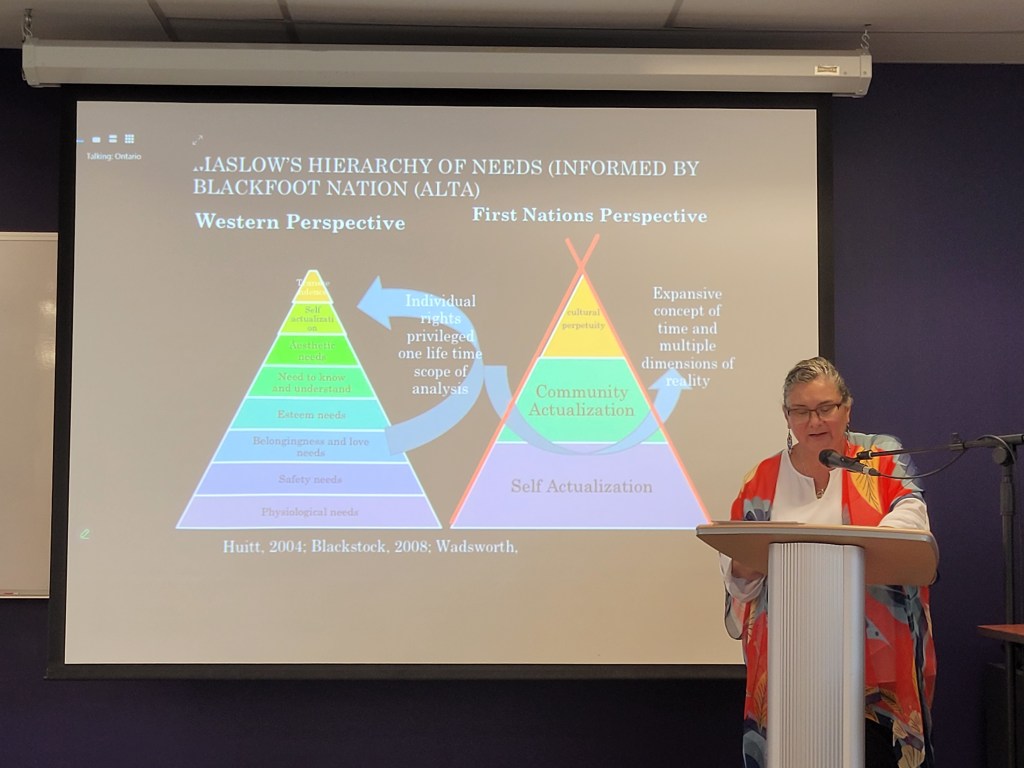
Education is more than training, more than the promise of a career. It is a spiritual discipline that should lead us to a deeper knowledge of good and evil. It takes intentional practises, often through mental and emotion struggle, that transform us into better, wiser leaders.
Especially higher education should open up fresh horizons of experience and thought. It should confront the student with the big questions of life, pressing them to consider the purpose of life and the meaning of their existence. It should press the student to ask: what role does my few breaths over maybe 70 years mean in the grand scheme of history on this broken planet, third rock from the sun?
In short: What are we here for? Who are we here for?
A good education will include asking questions about the foundations of the academic disciplines–where is history going? What are the limits of technological innovation? What makes art, literature, or drama inspiring, beautiful, or convicting? Are our cultural endeavours all there is, or is there a presence beyond us that calls us? Did we evolve out of dust, or have we also been endowed with a divine spark and corresponding responsibility?
So let me ask: what can a good education accomplish? I recently read a very short article in church magazine The Banner by Jennifer Fortosis, a second career mother who went to seminary as a mature student. You can read how she saw this venture as a daunting and costly privilege, but also a tremendous and thrilling opportunity. She knew the value of education and had a deep desire to grow.
She describes her education as an artistic journey, and while she was learning theology, the analogy can apply to any education–in science, math, business, social science, or other humanities. She writes: “I entered seminary reading Scripture in black and white; I left reading what feels like a Bible with pictures in full colour.”
How did this turn to vibrant colour happen? Well, she did not open a lab top and ask AI to tell her its biased and often spotty answers! It was certainly a struggle–a struggle to linger with the texts and let them seep into her heart and mind. She writes: “I learned it’s okay not to digest everything in one sitting.” She says she learned not to consume a vast amount of readings: “I’ve grown most by learning to look very small.” That means going deep on a sentence or a pattern like “a repeated verb” rather than go shallow on a whole book. She looks into the etymology of a single word and finds a whole world of meaning, texture, and history.
“I’ve learned to stay with a passage longer, listen more carefully, and trust that God meets us in patient attention.”
Jennifer Fortosis
Good Guides
Another key part of her education was her teachers. “I learned from my professors just how much I don’t know,” she writes. Being around people who are further down the road is a great way to stretch yourself. You need not be impressed, but if someone exposes a knowledge gap in your own insight, it can be empowering. You become motivated to know more, and you have right in front of you a guide to help you move further on and deeper into the subject matter.
Spending time with someone who has mastered some skill or material–is like being around a great student. No truly humble professor will say they have “mastered” something. They are more likely to say they have learned just how rich and vast and complex their subject matter has become to them. They will speak of how it has both revealed some deep brokenness and opened up more questions and deeper mysteries. So Fortosis writes that being around these seasoned students of the Bible has “sparked a childlike wonder and curiosity to explore Scripture’s context more deeply” within her.
Scholars may inspire, and that is the goal of the organization I lead. But they may also mislead, lie, and manipulate. Discernment is also a spiritual discipline.
Don’t Forget About Sorrow
“Seminary replaced my black-and-white Bible with one bursting in colour,” Fortosis concludes. This is so true. However, the colours are not only primary colours. Fortosis doesn’t mention learning about how fractured and fraught our readings of Scripture can be, and how awful our disputes about our readings can become. Scripture itself can be bloody, brutal, and barbaric. Of learning, the Bible’s wisdom literature says, “Much learning earns you much trouble. The more you know, the more you hurt” (Ecc. 1:18).

Scripture can also be weaponized, crudely deciphered, and used to split congregations and denominations. This, too, is part of seeing in colour, and sometimes the colour is not pretty. For any student, whether studying Scripture or any other aspect of creation or culture, its horrible corruption and multi-layered beauty should turn what is black and white to full colour for us, including the ugly, disturbing, and even impolite colours. Study economics and you will learn about greed as well as generosity. Study art and you will learn about the blandness of kitsch as well as the genius of inspired design. Study biology, and you will learn about the fight for survival and the defeat of the weak as well as the fundamental patterns of interdependence and reciprocity.
Full colour means not only the rich and sweet colours, but the tints and the shades, including the darker tones and textures. And of course, the many possible frames for the pictures we form about our social reality. (My colleague Shiao Chong uses the notion of 3 dimensions to fill out what a fulsome faith looks like.)
This is the sign of a good education–growing in wisdom, knowledge, and “fear of the Lord” as Proverbs urges us. That means acknowledging our fragile and often biased humanity, and bowing before the mystery of something much greater than ourselves. Whatever you study within creation ought to reveal something of the Creator, as well as the devil. We learn about both heaven and hell on earth, hoping to bring a little more of heaven into our world. What begins with a desire to know, can lead to a deep sadness for what is broken and destructive. But at best, we let that sense of lament form us as people bent to make a difference for good, and end with hope and thanks and praise for our Creator, Redeemer, and Sustainer.
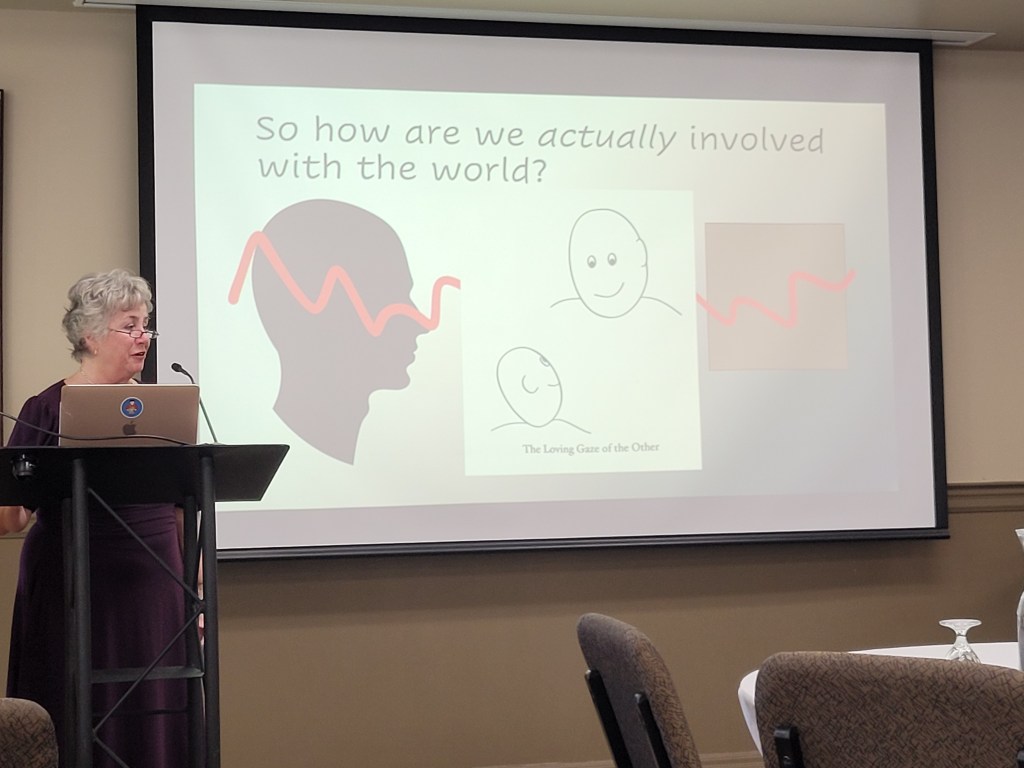
Note: Views on my blog arise in league with my work for Global Scholars Canada (GSC), where I am Executive Director. My writing here, however, does not represent the official position of GSC. GSC supports Canadian Christian scholars to redemptively influence academia and students, especially in underserved countries, for human flourishing and God’s mission. If you wish to support our work at GSC, you can donate at our page and designate it as “General Fund”. Thank you!

