
An earlier and shorter version of this article appeared in Christian Courier this month here. I have written before about an important figure in Canadian ecumenism–George Vandervelde, and I have served myself as a representative on the CCC’s Commission on Faith and Witness. In this article I focus on the Canadian Council of Churches, which has a long history of representing the joint efforts of the Canadian religious establishment. Peter Noteboom has grown and diversified that Christian ecclesiastical and cultural presence, and offers an example of faithful and dedicated service in the charitable sector. I have known him for a long time, and it was a privilege to interview him and talk about his long service with the leaders of Canada’s mainline (and now other) denominations.
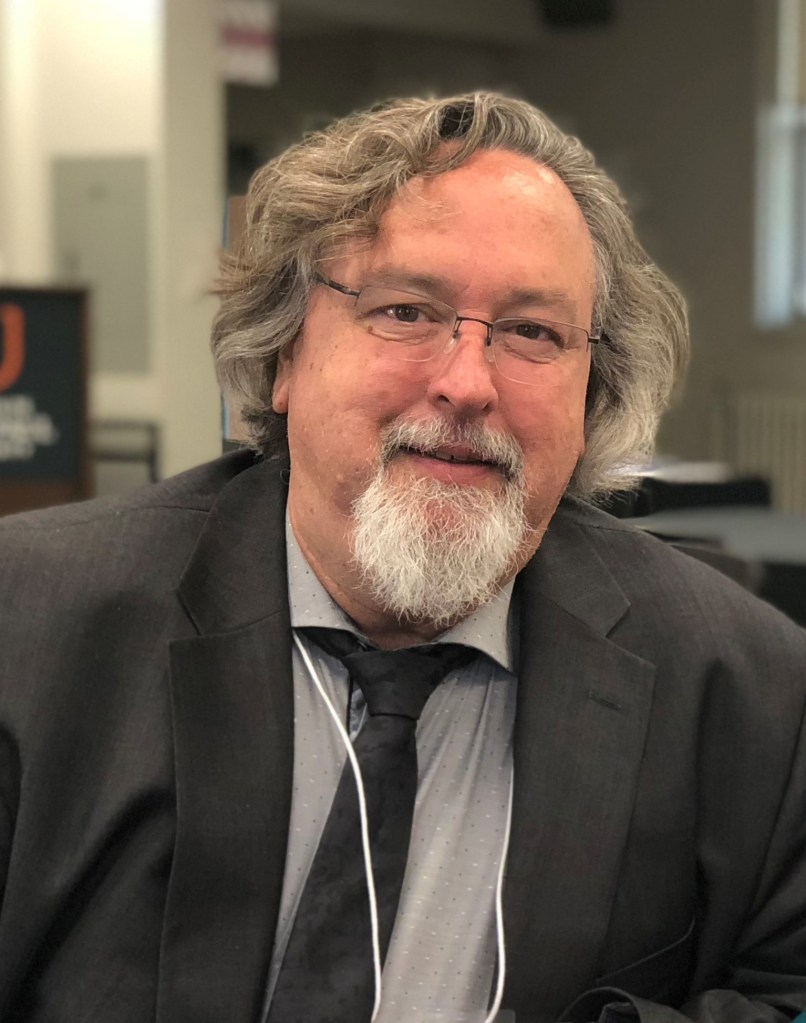
“This job of General Secretary is the best job in Churchland for me because it brings together things that I love, my connections and networks over the decades, and my three passions—faith, justice, and learning.”
– Peter Noteboom
It seems that wherever two or three are gathered, there is conflict. Yet Christians are obligated to actively pursue unity in their Lord and Saviour Jesus Christ, and this divine gift is also a church member’s earnest spiritual calling. It is both a grace, and a task. Ecumenism—working for the visible unity of the church within a world of separated denominations—is a response to Jesus’ well-known prayer in John 17: that his followers may be one “just as you are in me and I am in you.”
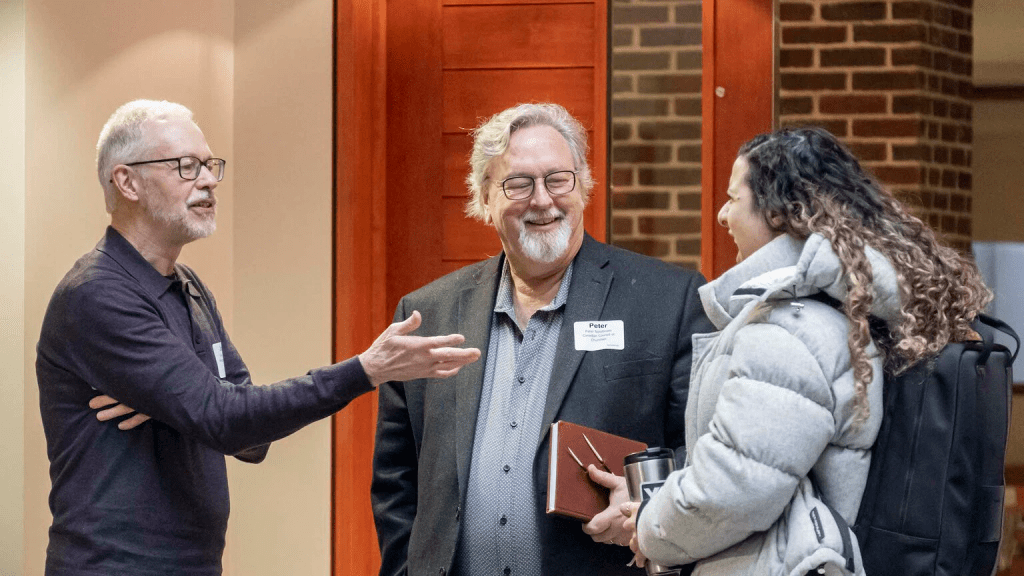
This unity in diversity has been the life-work of Peter Noteboom, who is moving into semi-retirement after completing two terms as the General Secretary of the Canadian Council of Churches (CCC). He has actually been working for CCC for 27 years now, first in the position of Associate Secretary, Justice and Peace, and then as the General Secretary since 2018. This involves a long obedience in the same direction, a journey worthy of some sustained reflection as it mirrors some of the challenges of church and state over the last few decades.
He is the first member of the relatively small immigrant denomination–the Christian Reformed Church in North America (CRCNA)–to fill this national leadership role since CCC began in 1944. In fact, it was some key CRC figures in his youth that encouraged him to get involved with CCC. Leaders like Arie Van Eek, Ray Elgersma, George Vandervelde and Adrian Helleman were pioneers in a Dutch immigrant community who modelled a kind of ecumenism in their own pastoral roles that Noteboom found inspiring. (Adrian Helleman is global scholar with Global Scholars Canada, the organization I lead).
Crossing denominational lines was also a part of Noteboom’s own spiritual formation. With an undergrad at Dordt University in Iowa, he went on to do a master’s degree at the Catholic University in Leuven, Belgium, with subsequent graduate work at the Institute for Christian Studies and St. Michael’s College — in political theory and interfaith dialogue respectively. “My Reformed inheritance gave me a robust intellectual apparatus to bring to ecumenical conversation,” he said. “Theoretical tools, a commitment to pluralism, and the notion that there is not one square centimetre that Christ does not claim as his own.”
Leading the CCC is not the only thing Peter Noteboom has done. He has been director and owner of Global Learning Partners since 1996–before his work with CCC had begun. GLP supports organizations in their journey to embody a culture of continual learning and improvement–equipping agencies for things like strategic planning, member training, and leadership development. No doubt his experience in such organizational learning has gifted him uniquely for helping CCC flourish, even through a global pandemic and a polarized Canadian culture.
Spiritual Reservoir
Noteboom needed more than intellectual framing and organizational technique as he brought church leaders together from across the country and across the theological spectrum. “The role requires a certain kind of spiritual reservoir,” he explained. “The ability to hold difference, to hold some kinds of conflict, and an incredibly long sense of patience that acknowledges change can sometimes take decades—or centuries.”
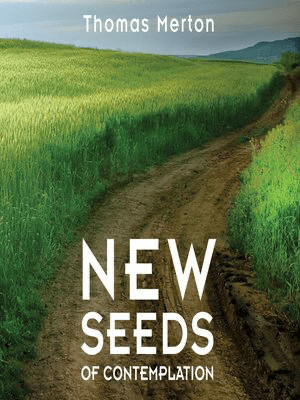
When asked how he nurtures this reservoir, he spoke about silence, waiting, relying on the prayers of others, and the writings of Trappist monk Thomas Merton. He also spoke of a practise of “relativization”—“seeing things in a bigger, broader context and then holding that bigger, broader context.” This is not “relativism”–that everything is of equal value, but a sense that everything is related to its own social situation, and knowing that wider context offers a wider perspective on any given issue.
While an activist in many ways, Noteboom learned early on that the key to the position was being a facilitator who “sets a pastoral tone.” So he got ordained as a lay minister in the CRC and joined the ranks of the clergy. Then he set off to lead the Canadian ecumenical movement’s national mission, as he often describes it: “we respond to Christ’s call for unity and peace; we see Christ’s truth with an affection for diversity; and we act in love through prayer, dialogue, and witness to the gospel.”
Out of this comes cross-denominational meetings that bear witness together to the government and all Canadians on significant cultural and social issues: peace and disarmament, poverty and anti-racism, AI and gene editing, interfaith relations and prayerful action for Christian unity. Noteboom has personally lead programs involved with the World Council of Churches, military and prison chaplaincy, and interfaith relations, especially with respect to the Government of Canada (he has facilitated or been in meetings with the Prime Minister on multiple occasions).
A Decade of Change
When asked what he thinks he’s accomplished, he names three things: bringing the younger generation onto CCC staff and Directors (from zero to now 10 younger staff and Directors); building the capacity of the CCC and consolidating different Canadian ecumenical programs and organizations; and finally, coming up this summer, the very first joint project between the CCC and the US National Council of Churches, entitled “Where Now for Visible Justice?” taking place in Detroit and Toronto.
Noteboom, however, has done much more. When I asked about the numbers, he explained to me that he has doubled the budget (and fundraising work!) of the CCC, doubled its staff, and while denominational memberships have stayed stable, he has quadrupled the number of church affiliates and observers—those churches who are not quite ready to become full members yet. All this means a healthier and more empowered staff and vastly increased capacity for cultivating ecumenical cooperation in Canada, to the point where internationally, “few other national councils are doing as well as the CCC.”
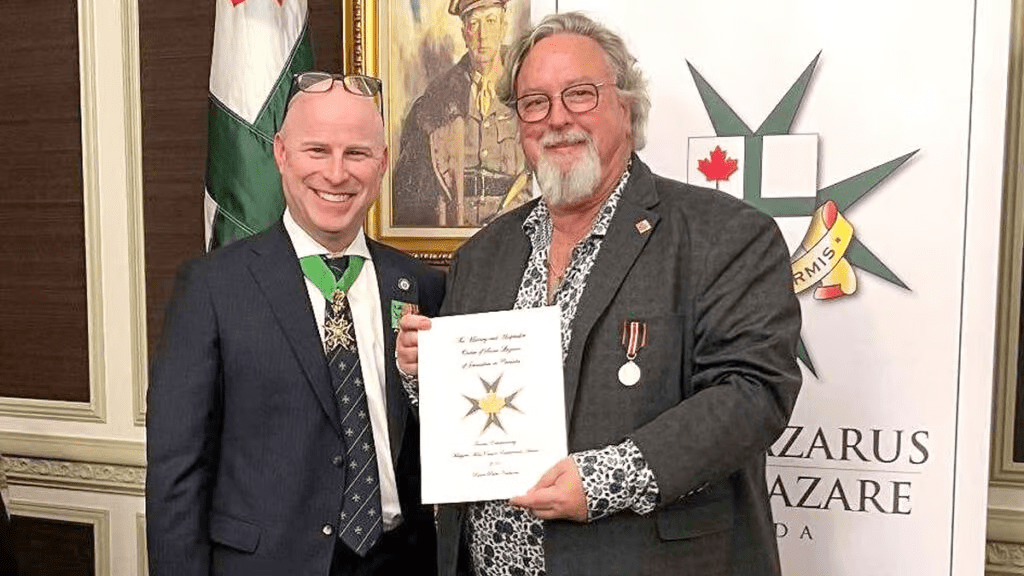
For all this, Noteboom has received three awards, two from ecumenical bodies and the other the King Charles III Coronation Medal. “It is nice to get recognition,” said Noteboom. “It is also a recognition of the work the Council does, and its contribution to Canadian society.” He went on to explain that historically, the diplomatic, multicultural Canadian identity in part is a legacy of the CCC: “It all started by bringing Protestant and Eastern / Oriental Orthodox churches together, then the Eastern / Roman Catholic church and Evangelical churches like the Christian Reformed Church became a full member in the mid 90’s.” Then he added: “The next major Christian tradition to belong may be the holiness and Pentecostal tradition.”
The Pentecostal Church in Canada (PAOC) is one of the few denominations that is stable and even growing in Canada at this time, and historically has not been part of the CCC. It would truly be an accomplishment to see the Pentecostal Church of Canada become a full and active member of CCC.
There is much appreciation for Noteboom coming from different denominational leaders. “Peter is a mentor and friend who brought a big heart and a “can do” attitude to his work at the CCC,” said Lt. Colonel Jim Champ, Salvation Army representative to various CCC programs. “As a result the Council and the broader ecumenical movement in Canada is stronger today.”
“He is not only the best connected Christian leader in Canada,” said Das Sydney, President of the Council during Noteboom’s tenure, “he is a keen listener who can challenge the powerful and effectively advocate for the powerless.”
“Peter has led the Council with strong Christian faith, exceptional organizational skill and visionary leadership,” said Stephen Kendall, President of CCC’s board from 2018-2021. “Time and again he saw what was needed and brought it to fruition. We have been blessed in the ecumenical movement to have Peter in this role.”
Less Toronto, More Canada
What contextual changes have happened since he came on board? One significant change, accelerated by the technology of COVID, is “we used to be a Toronto-centric in-person organization, and now we’re a virtual organization that is across Canada.” Video-conferencing has been “a blessing and a gift” that has enabled so much more diverse participation. Some of the CCC’s group still insist on in-person deliberations, but others find the convenience of cross-country meetings without leaving home to be the new normal.
He also mentioned how being ecumenical now is not enough to get attention in Ottawa: it is more likely that inter-faith coalitions will be noticed by the government. The age of mainline PLURA power has passed (Presbyterian, Lutheran, United Church, Roman Catholic, and Anglican) and the CCC looks not only to evangelical churches and newcomer (immigrant) churches, but to Christian organizations and in strategic moments other religious groups to cultivate justice, peace, and unity in our country.
“We seek Christ’s truth with an affection for diversity,” is one of the CCC favourite sayings. Peter adds what he learned from one of his ecumenical mentors, Janet Somerville, “That friendship is the first principle of ecumenism.”
When asked about frustrating aspects and bad experiences, Noteboom doesn’t have much to say. “I wear rose-coloured glasses,” he says. The age of polarization has not torn the CCC apart; “the difference is the polarization isn’t between churches,” he explains, “it’s within every church.” One part of his journey has been hard, though, and in part due to his work ethic and delight in every blessed ecumenical opportunity that might arise: his heart can’t keep up and so he needed valve replacement surgery during COVID.
How will Christian churches mature into a deeper relation and connection with God, with our own spirituality, and in our communities? Will we travel a road of division and difference and separation, or will we travel the road of unity, justice for all, dialogue, and deeper oneness in Christ? At its best, the Council cultivates a spirit of unity, appreciation, friendship, and affection for its members to deepen their mutual understanding and to coordinate and collaborate, acting together in love.
- Peter Noteboom
Ecumenism is not for the faint of heart, as Noteboom demonstrates in his own ecclesiastical journey. Recent conflicts in the Christian Reformed Church led to his own congregation of First Toronto disaffiliating from the denomination (not the only congregation to do so of late), and so Noteboom’s credentials are now with the Willowdale CRC congregation.
“It’s not lost on me, this deep contradiction between a life devoted to Christian unity and a decision to disaffiliate,” he said. “But it’s a part of the deep spiritual reservoir: holding these two experiences at once.”
What comes next? Noteboom may continue in some other roles with CCC, with the World Council of Churches, and with other like-minded organizations. He has already been appointed to the Board of Directors of Nature Canada. He has lots of experience in organizational development, agency cooperation, leadership and management, and collective Christian effort in the social sector.
“My three passions—faith, justice and learning—they are not going away.”
Note: Views on my blog arise in league with my work for Global Scholars Canada (GSC), where I am Executive Director. My writing here, however, does not represent the official position of GSC. GSC supports Canadian Christian scholars to redemptively influence academia and students, especially in underserved countries, for human flourishing and God’s mission. If you wish to support our work at GSC, you can donate at our page and designate it as “General Fund”. Thank you!

