

I have cycled across Canada, hiked the length of the Bruce Trail, and our family goes canoe camping every summer in northern Ontario. I take delight in being outdoors, but I also enjoy church.
Some people, including myself, sometimes, say, “I get the spirituality of creation, and how we are all part of this beautiful, wonderful universe. I just don’t see how Jesus and all the blood and dying and rising fits with the world of nature. Nature is grand and near and experiential, and the cross is gruesome, historically distant, and rather theological.” The two seem to be two different worlds.
Usually we leave nature to go into church and leave church to return to nature. In what follows I want to show that theology and biology, the Bible and creation, church and nature are actually on a similar wavelength. In theological terms, I will make a key connection between special and general revelation, and the link between the two is found in Jesus Christ.
But you will only agree with me if you will see the natural world in what we might call a pre-modern way. So I will have to critique the modern, secular understanding of nature as we proceed. This meditation began as a sermon on a Christian view of power (Philippians 2) and then evolved into this blog on nature/church.

Competing for Life
Christians believe that the book of nature and the Biblical books are not at odds because they both ultimately have the same author. The Holy Spirit hovers over creation, sustaining all life, and also in an unusual way inspired the 66 books of the Bible such that they are distinctive in their rendering of the human relationship to God. Most importantly, the text points to Jesus Christ, the central revelation of God to humankind. So the story of Jesus will have to mesh with the pattern of nature. In fact, Paul says “all things” were created through Jesus and hold together in Jesus (Colossians 1).
Let’s start then with the created world around us, which at first seems problematic for my thesis.
Every single created thing takes delight in being what it is. Plants love sunshine and rich soil and they sprout leaves and flowers. Animals wander around field and forest looking for tasty plants then drop their poop into the soil, and amble onward. Other animals are looking around for these plant-eating animals, hunting them down, eager to do to those smaller animals what the smaller animals did to the plants.
This is just a crude summary of the vast, intricate, colourful, complicated web of life that is creation. From tiny single-celled organisms to the revolution of planets and expanding galaxies, there are food chains, gravitational relationships, and more mysteries that are waiting to be discovered and explored.
When it comes to life on this planet, though, there appears to be a shadow on this, as it seems each creature does its own thing, looking out for its own interests. Evolutionary theory has told us about nature red in tooth and claw, ruled by the “survival of the fittest” and one biologist in particular, Richard Dawkins preaches about the “selfish genes” that are predestined to do everything to preserve themselves and their offspring. Those organisms that are the strongest, win. The weaker species are the evolutionary losers. In this view of creation, all of life on this planet can be summarized in one word: enmity, a sort of unrelenting rivalry for life, growth and flourishing.
Now I am not an expert on this, but my readings (which I will share soon) tell me we must distinguish between Darwin and some neo-Darwinists like Richard Dawkins. The latter emphasize more the “selfish gene” theory.
Now let’s zero in on humans, who also have that God-given drive to flourish and that shadow side of intra-species competition. In fact, that notion of enmity is even more pronounced in homo sapiens, and the stories we read in the Bible undeniably confirm that. From Cain and Abel onward we turned to envy, rivalry, antagonism and conquest, battle after battle, empire after empire, including genocide, slavery, exile, and occupation. As one book title puts it: bloody, brutal, and barbaric. The cross itself is evidence of our natural inclination to be at war with each other and beat down our competitors.
We need not look to the Bible to confirm this. We can just look at the news, as the spirit of enmity blows through the air we breathe today: Ukraine and Russia, Israel and Hezbollah, the US and Iran. Antagonism seems normal also in our culture, as the political right and left hunker down in their respective camps, lobbing contorted sound bites over to each other. The Right sees rivalry in a free marketplace as social necessity, without regulations from swollen government offices. The Left sees all social life as the power plays between races, genders, classes, and sexualities and deeply desires regulations from government and policies. Both see the way of all life as inherently adversarial. Our court system follows a similar pattern.

These rivalries creep into the church and denominational politics and we see our neighbours, our colleagues, and even church brothers and sisters through the same adversarial lens: all the world, economic, political, spiritual rivals, all of biological and cultural life, caught up in this evolutionary power struggle, and if we didn’t pay careful attention, we might even, as good church-going Christians on the outside, start to rather cynically believe on the inside that power struggles are reality, and believe that each creature looks out for its own interests, and well, that is just the way things are, the very nature of biological and social life. The facts are, resources are scarce, and one person’s win is another’s loss.
That’s life, as they say.
Rivalry Isn’t Everything
But is it? That description of life on planet earth sounds more like the broken, sinful, corrupted edge of things.
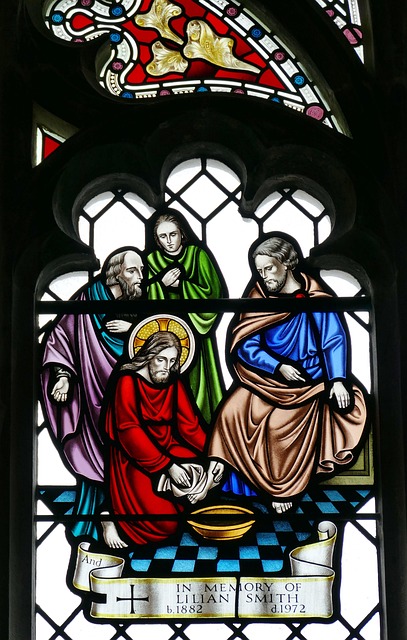
It should not be so with you. Jesus says that to his uppity disciples in Matt. 20:26 when they were jockeying for position in his wandering ministry band. A moment later he says, “The Son of Man came not to be served but to serve.” Jesus demonstrates this again and again, as he heals the sick, feeds the hungry, and teaches the ignorant. Even the night he was to be betrayed and deserted by his disciples he casts off his robe and dawns a towel to wash his disciples feet, like a servant would.
The text I focused the original sermon on here came from Philippians 2, where Paul addresses a conflicted Philippian church and basically says the same thing as Jesus said: it should not be so with you. Paul says in verse 3 and 4, “Do nothing out of selfish ambition or vain conceit. Rather, in humility value others above yourselves, not looking to your own interests but each of you to the interests of the others.”
This is not the ethic of selfish genes.
Then he says this: “in your relations with each other, you should have the same attitude as Jesus Christ.” Here Paul points an intensely, unrelenting antagonistic world toward Jesus, and he essentially tells the old story, using this ancient poem that he or someone before him composed, and which holds the key pieces of the gospel. We know it is a poem because of the Greek rendering of the text, and so many English translations of the text switch from paragraph form to poetic stanza style. Some suspect this could be something many believers had memorized, like a basic creed of early Christianity.
Call it the core of early Christian theology.
Who, being in very nature God,
did not consider equality with God something to be used to his own advantage;
7 rather, he made himself nothing
by taking the very nature of a servant,
being made in human likeness.
8 And being found in appearance as a man,
he humbled himself
by becoming obedient to death—
even death on a cross!
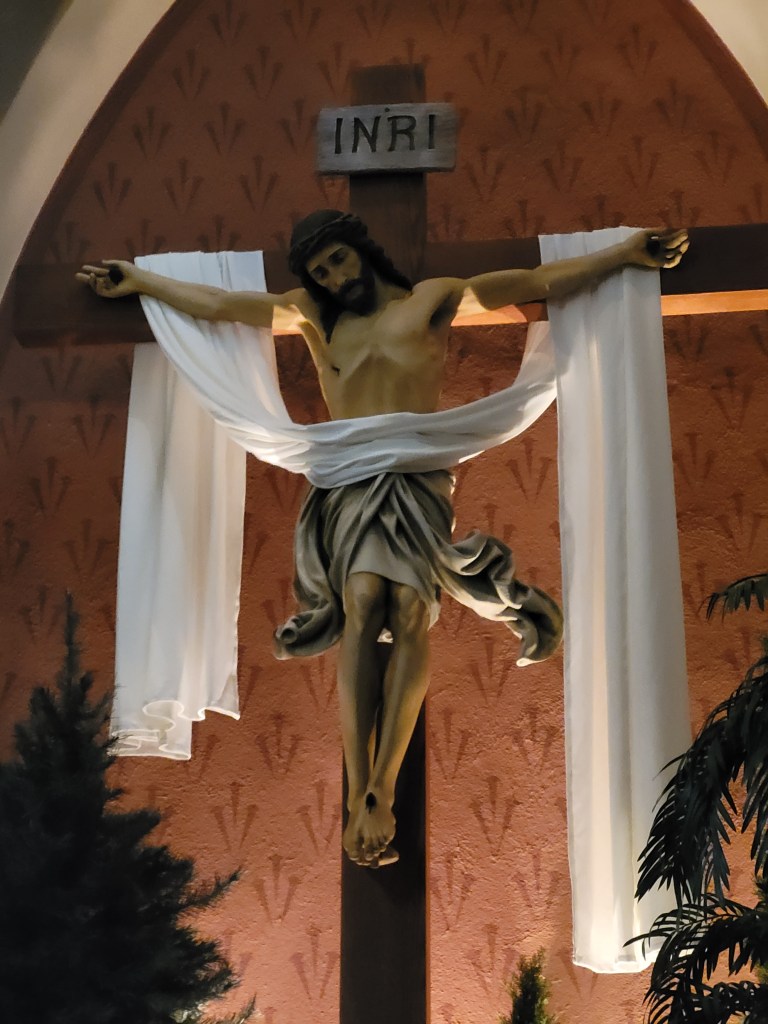
The poem describes how Jesus, being part of the trinitarian Godhead, had the ultimate vitality and life. He had the supreme ability to change things. But he did not seek to grasp onto that status. And you need to realize Paul is not saying Jesus gave up his divinity and stopped being God, but that he didn’t clench his fists around the status or privilege that comes with divine power. The NIV says he “made himself nothing” but the Greek verb kenosis there more accurately says he emptied himself, but not to nothing—what he really did was pour himself into becoming a human, a humble, wandering servant of his people.
There is something modest or perhaps even shy about God here.
John Calvin says that Jesus chose to conceal his divinity, like a secret, and took the wonderful disguise of an ordinary man. He showed people a new attitude–some beatitudes–and people resonated with his teaching. Crowds gathered, eager for more teaching, healing, feeding. But the powers that be got rankled by him, and wanted to do away with him, and he voluntarily absorbed their hate, torture and violence, and was killed—a most ignoble and gruesome death on a cross. Like a real ultimate loser, a young, dead, nobody at age 33.
The poem then shifts its tone and then quickly ends.
Therefore God exalted him to the highest place
and gave him the name that is above every name,
10 that at the name of Jesus every knee should bow,
in heaven and on earth and under the earth,
11 and every tongue acknowledge that Jesus Christ is Lord,
to the glory of God the Father.
God, who is the ground of all being, the source of all life, takes those things that are low and raises them up. That’s what God does. What is humble, he exalts, and what is dead, he can make alive again, and that’s the story of the resurrected and ascended Jesus and we call this story good news, especially for the underdogs.
This story unveils the attitude of Jesus Christ, and it flips the antagonistic world on its head. It is an ethic where the weak are strong, the poor are rich, and dead come back to life. It is the way of using power to donate rather than to dominate, for charity rather than combat, and this is the true heart of reality, summarized in one word: service. Channeling our natural inner drive for life and flourishing into service of the greater whole. Changing things for good.
Mutual Interdependence
Next I want to show that what we see in the story of Jesus is truly, in our best reading, the pattern of creation itself.
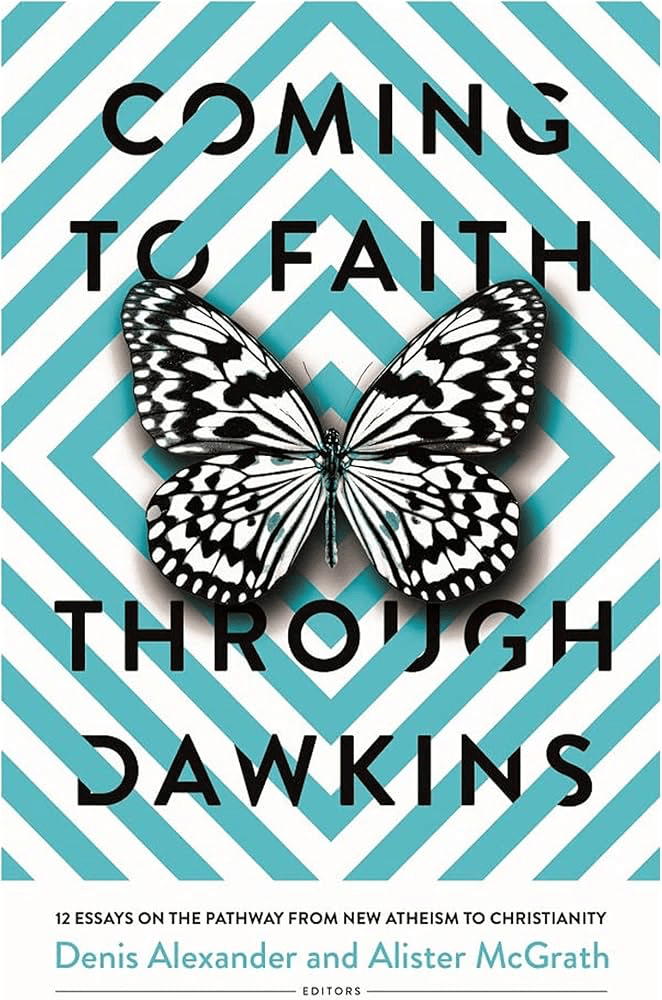
Let me start with a fascinating story from Andrew Gosler, Professor of Ethno-ornithology at Oxford University. I’m getting this from his chapter “Hearing God Through an Enchantment with Nature” in the rather compelling book of academic testimonies entitled Coming to Faith Through Dawkins: Twelve Essays on the Pathway from New Atheism to Christianity (Kregel 2023).
Gosler studied an African bird called the greater honeyguide. Apparently, this bird lets out a kind of “chatter” call when it has found a bees’ hive with honey. The Boran people of Kenya have learned to be alert to this sound, and the bird changes its call to lead the Boran hunters to a bee’s nest. The people get their honey, and always leave some bees wax for the honeyguide, who devours the bee’s wax. This mutually interdependent relationship has developed over millennia in Africa: the birds and the bees, and the hungry humans beings, working together.

What is the point? Dr. Gosler says that the neo-Darwinian (not necessarily Darwin!) reduction of biological life to mere competition for survival and “nature’s bitter self-interest” of selfish genes reflects more the worldview of the scientists than it does what is actually going on. “Robbing all life of meaning or value, [this worldview] denies all motivation for human concern for the welfare of indeed existence of others, let alone other species, other than that of pure self-interest.” Taking this view of biological life into social life as was done in the early 20th century gave us eugenics, racism, and ultimately, the Holocaust. It is a very bad paradigm for looking at the world.
These modern scientists who champion competition and fitness fail to perceive what Africans and indigenous people and the Genesis account have known for ages: “that life’s diversity reflects the working out of millions, if not billions, of years of conflict resolution.” (111) Yes, that is what he wrote: conflict resolution as the story of biological life. It’s about adaptation and symbiosis over time, and less about the so-called “selfish genes” competing for survival. Species are trying to get along, work for mutual benefit, and ultimately all depend on each other.
The honeyguide and honey hunters show us, he says, that “life at every scale, from subcellular organelles to the global biosphere, expresses a fundamental relationship of mutual interdependence. This essential wisdom of interdependence runs through every being—plant or animal—that has the breath of life.” (118). If you have eyes to see it.
Let me bring this biologist’s research in concert with a theologian’s take.
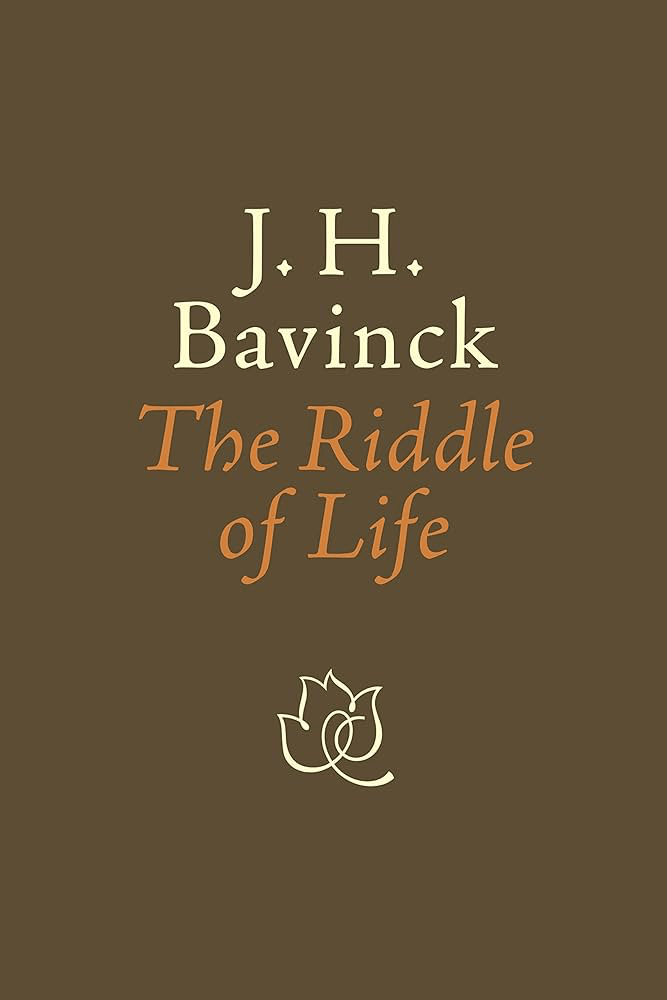
There is a very interesting section in 20th century Dutch theologian J. H. Bavinck’s tiny book The Riddle of Life (published 1940). He said when you look on creation in all its rich complexity, you must be astounded. You can keep finding new species every day of your life and not run out. And you have to wonder, he says, at the order of it all, and how “everything on earth is somehow harmoniously connected to everything else. The one species influences the other and the one creature depends on the other” (17).
Then he says this: “You don’t even need to explore everything too deeply to discover the amazing fact that behind everything there is an invisible set of laws: that the one as it were serves to complete the other. The butterflies serve the flowers just as much as the flowers serve the butterflies… it’s all about serving. The law of serving is at the heart of every creature: it is the overarching purpose of every being.” (18) This is the creation norm. The law of serving. And it’s not all sweet and pretty. There is still predation and death, but it is all part of a larger ecosystem where populations depend on each other.
The Exception
Yet. There is one creature on this planet where this law of serving is not always the dominant pattern: humans. Sure there are great mothers and fathers, doctors, teachers and farmers, who show this law on a regular basis. But within this same powerful creature is a strong and dangerous inclination, the “me first” instinct, evident already in small humans but exploding with guns and bombs in larger humans. “We centre life around our own interests,” writes Bavinck, “while often pushing away the needs of others… Given this weakness, we humans have been given a command: serve one another!”
In a way, the command to serve is a calling to join the rhythm of creation, so that our lives resonate with the original law that seems to be operating in the rest of a broken but resilient creation, if you have the worldview to see it. Our choking planet depends on us working together, on us stewarding ecosystems and church systems and social systems for mutual well-being, a shalom. That is the paradigm that leads to life and flourishing for all.

So now you can see how creation and cross some together. Adam and Eve took the apple because they wanted to grasp at being God, and so unleashed a whirlwind of envy and conflict that even the great prophets could not contain. But God in Jesus laid aside his divine title, seeing it not as something to be grasped, and came down to show us that the purpose of life is not to be served, but to serve. This is the story that beats at the heart of the Christian faith, and the creation itself. Creation is a community intended for harmony, like the Trinity. This is the attitude of Jesus Christ and the law of creation, each mirroring the other. Christianity is not some foreign imposition of morose servanthood onto our otherwise vital and energetic lives (a la Nietzsche), but the restoration of the normal way of all things great and small: using power for mutual benefit, for the common good.
That is a Christian view of power, not as a struggle or rivalry, as a zero-sum game of winners and losers, but as sharing, sacrificing, serving, for the good of the whole. That’s it. Creation and cross, in sync through the Holy Spirit, the breath of life, also known as the flame of love. Christianity is a challenge to the love power by turning us to the power of love.
And as verse 15 and 16 say in our text today, if you live this out, “in a warped and crooked generation” … you will “shine among them like stars in the sky.” In other words, you will be like creation itself…
Note: Views on my blog arise in league with my work for Global Scholars Canada (GSC), where I am Executive Director. My writing here, however, does not represent the official position of GSC. GSC supports Canadian Christian scholars to redemptively influence academia and students, especially in underserved countries, for human flourishing and God’s mission. If you wish to support our work at GSC, you can donate at our page and designate it as “General Fund”. Thank you!

 Sensus Divinitatis