
J. David Stark
Following Jesus requires migration. Sometimes, that migration’s from one place on a map to another. It’s always toward Jesus.

J. David Stark wrote an article for the Kirby Laing Centre entitled “Discipleship Means Migration.” Since Global Scholars Canada prioritizes sending professors across borders–electronically or physically, for long or short periods, I engaged David in a short email dialogue, and asked him to follow up with further considerations. He has obliged me, and his thoughts are below, where he explains in what way “following Jesus is irreducibly and inescapably migratory.”
According to Rom 8:14, “as many as are being lead by means of God’s Spirit, these are God’s sons.”1 Or on the other hand, “if anyone does not have the Messiah’s Spirit, this one is not [the Messiah’s] (Rom 8:9).
So, the presence and leading of the Messiah’s Spirit are key elements of “sonship” (e.g., v. 15). This framing doesn’t marginalize female Jesus followers, nor does it prioritize male Jesus followers (see Rom 8:16–17, 21; Gal 3:28).2 Instead, the framing takes its cue from Jesus as the divine Son (e.g., Rom 1:1–7).
The Spirit’s presence and leading were central to Jesus’s life as a first-century Jew.3 They continue to be central for his followers’ participation in his sonship through “the Spirit of sonship” (Rom 8:15; see also Rom 8:1, 16).

In Paul’s conception, there are multiple dimensions to the Spirit’s leading that goes along with sharing Jesus’s sonship. But across these dimensions, the Spirit’s leading is thoroughly geographic.4
Cartographic Geography
When we think of geography, we often think of places like we can point to on maps—i.e., “cartographic geography.” These places have different sizes, locations, and relations to other places. They might be
- Mexico or Mozambique,
- Alberta or Magallanes,
- Auckland or Beijing,
- Brooklyn or Westminster.
The Spirit leads Jesus’s followers in and to these and all sorts of other cartographic places.
Paul’s Travels

Similarly, by the time Paul writes to Jesus’s followers at Rome, he has announced the good news “from Jerusalem and around to Illyricum” (Rom 15:19). And Paul looks forward to a visiting Rome as accompanied by “the fullness of the Messiah’s blessing” (Rom 15:29).
Paul’s Non-Travels
Yet not all has gone to plan. Early in the letter, Paul makes a point to convey (“I do not want you to be ignorant”) how “many times I have wanted to come to you, and I have been prevented” (Rom 1:13).
Paul identifies “now” as the point to which he’s been prevented from visiting (Rom 1:13; “until now”). But the whole reason Paul writes to the Roman Jesus followers is that he is not yet visiting them.
Paul’s inability to visit “until now” stretches out into a future about which he has ideas but, ultimately, no certainties (Rom 15:22–33). And it is not as though Paul’s prevention from visiting Rome means that he has either
- not been moving around (as if perpetually incarcerated) or
- pulled entirely out of any place (as if to another dimension).
Instead, Paul’s visit to Rome has gotten deferred precisely because he has been at work—and fruitfully at work—in places besides Rome (Rom 1:13; 15:14–21).
Following Jesus across Cartographic Space
As for Paul in particular so too for Jesus’s followers in general, this situation is entirely normal. In terms of cartographic geography, following Jesus involves profound displacement and uncertainty.5
As Jesus tells an unnamed scribe, “The foxes have holes, and the birds of the heaven will settle down, but the Son of Man has nowhere that he might lay his head” (Matt 8:20; see also Matt 8:19; Luke 9:57–58). Or speaking to Nicodemus about those born “from water and the Spirit” (John 3:5), Jesus notes how one cannot tell where the Spirit comes from or is going (John 3:8a). “So,” Jesus continues, “is everyone who is begotten from the Spirit” (John 3:8b).
Jesus’s followers “do not have here a city that remains but … are searching for the city that is coming” (Heb 13:13; cf. Heb 8:7; 11:6, 14; 12:17). So, following Jesus is irreducibly and inescapably migratory.6 And sometimes, this migration requires movement from one place on a map to another, perhaps quite distant, different, or surprising.
Personal Geography
This said, it would be a mistake to perceive or portray the Spirit’s leading as mainly cartographic. When the Spirit leads Jesus’s followers from one place on a map to another, that means movement across cartographic geography, by definition. Without it, we’d resist rather than follow the Spirit’s lead.
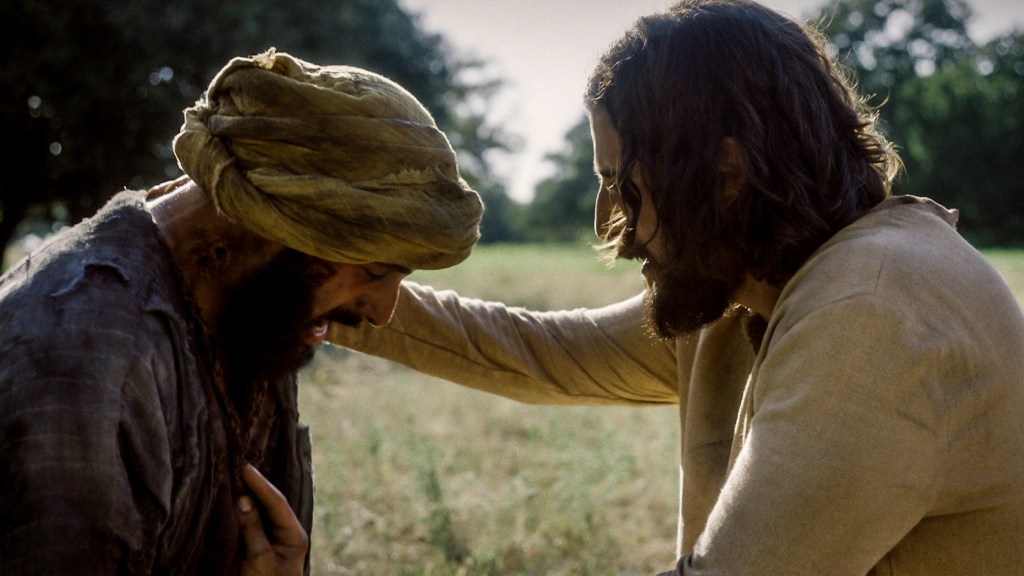
But even in such cases, the Spirit’s leading is never primarily cartographic; it is always primarily personal. That is, the place to and in which the Spirit leads Jesus’s followers is always primarily his presence, the place that is with him (cf. Mark 3:14).
In this way, the Spirit’s leading marginalizes the relevance of cartography. Places don’t principally relate to one another as “domestic” or “foreign,” “near” or “far.” Instead, the Spirit’s leading reconstructs the significance and relations of every cartographic place.
Cartographic places still exist; maps’ lines aren’t erased. But these lines come not so much to separate places as to join them.
Joined in this way, maps’ places are where Jesus’s followers experience the day-to-day realities of life with him. This experience involves both
- all the diversity that pertains to these day-to-day realities themselves and
- all the unity that pertains our collective being with Jesus as the one Messiah.7
In Romans
As Rom 8 describes,
the Torah of the Spirit who produces life with Messiah Jesus has freed you from the torah of sin and from death (Rom 8:2; see also Rom 7:5, 10, 13, 23–25; 8:9–10, 23).

When freed in this way and following the Spirit’s lead, we no longer live—in whatever cartographic place—with the enslaver, sin (Rom 7:7–25).8 Instead, we live with Messiah Jesus, who is both brother and Lord (Rom 8:15–16).9
We emigrate from a place where the enslaver, sin, holds dominion. And we immigrate to a totally different place defined by the presence of Jesus, the brotherly Lord. This migration happens—and must necessarily happen—whether or not we change the cartographic place(s) where we live.
In the End
In its fullness, Paul foresees how the place defined by Jesus’s presence as the brotherly Lord encounters and renews every cartographic place (Rom 4:13; 8:19–22). This fullness arrive when Jesus’s followers experience being with him so acutely as to participate in his own resurrection life (Rom 1:4; 8:19, 23, 29–30; 1 Cor 15:35–49). But however eagerly Paul anticipates this fullness, it is is clearly and profoundly not yet (Rom 8:19, 23, 25).
Conclusion
Exactly because this fullness is not yet, following Jesus is always a matter of migration. For some Jesus followers, this migration might require cartographic relocation. For others, it might require living in the same cartographic place. This requirement change at particular time(s) due to any number of circumstances.
And yet following Jesus always requires personal relocation. It is always a movement away from the self-justifying narcissism of our own willfulness and malformed desires, whether large or small, whether censurable or socially excusable (see Luke 18:9–14; Rom 6:12–23; 7:7–25). And it is an unending movement
- toward Jesus;
- toward sharing in his life, self-giving, and resurrection; and
- toward living and enacting in ways appropriate to our lives his own life, self-giving, and resurrection.10
J. David Stark is Professor of Biblical Studies and the Winnie and Cecil May Jr. Biblical Research Fellow at Faulkner University and a Senior Research Fellow at the Kirby Laing Centre for Public Theology in Cambridge. For more from David, see jdavidstark.com. If you found this essay helpful and would like to read more on this and related topics, just let David know.
- Throughout, translations are mine. ↩︎
- Douglas J. Moo, The Letter to the Romans, 2nd ed., NICNT (Eerdmans, 2018), 523n1023. ↩︎
- See Myk Habets, The Anointed Son: A Trinitarian Spirit Christology, Princeton Theological Monograph Series 129 (Pickwick, 2010) ↩︎
- Another key dimension is telic—i.e., the leading’s goal of Jesus-likeness (cf. Rom 8:28–30). Ultimately, this dimension can’t be separated from the leading’s geographic dimension. So, I’m here focusing on the geographic dimension for the sake of space. ↩︎
- Cf. James Walsh, ed., The Cloud of Unknowing, Classics of Western Spirituality (Paulist, 1981). ↩︎
- See Francis, “Message for the 110th World Day of Migrants and Refugees 2024,”The Holy See (Rome, 29 September 2024), https://www.vatican.va/content/francesco/en/messages/migration/documents/20240524-world-migrants-day-2024.html; J. David Stark, “Discipleship Means Migration,”The Big Picture 15 (2025): 35–37; cf. Jeff W. Childers, “‘In the Guise of Wrath Did He Give the Riches of His Beneficence’: The Drama of Divine Pedagogy in Early Syrian Interpretations of Genesis 11:1–9,” in Reading for Unity in Genesis 1:1–11:9, ed. Daniel B. Oden and J. David Stark (Bloomsbury T&T Clark, 2026), 223–42; John Mark Hicks, “Resisting Babel: A Polemic Against Imperial Power,” in Reading for Unity in Genesis 1:1–11:9, ed. Daniel B. Oden and J. David Stark (Bloomsbury T&T Clark, 2026), 243–67; David M. Moffitt, “Hebrews’s Kaleidoscopic Reading of the OT: Reflecting on Jesus in Light of the Absence and Anticipated Return of the High Priest, Moses, and Joshua,” in Appropriating Hebrews’s Scriptural Hermeneutic for the Twenty-First Century, ed. Dana M. Harris and J. David Stark (Bloomsbury T&T Clark, 2025), 165–88. ↩︎
- See J. David Stark, “Hermeneutics, Unity, and Genesis 1:1–11:9,” in Reading for Unity in Genesis 1:1–11:9, ed. Daniel B. Oden and J. David Stark (Bloomsbury T&T Clark, 2026), 12–15. ↩︎
- Susan Eastman, “Double Participation and the Responsible Self in Romans 5–8,” in Apocalyptic Paul: Cosmos and Anthropos in Romans 5–8, ed. Beverly Roberts Gaventa (Baylor University Press, 2013), 98–99; Susan Grove Eastman, Oneself in Another: Participation and Personhood in Pauline Theology, Cascade Library of Pauline Studies (Cascade, 2023), 78. ↩︎
- For fuller discussion, see J. David Stark, “The Spirit of Sonship: The Formation of Desire in Faith Toward Jesus,” in The Role of the Holy Spirit in Spiritual Formation, ed. E. Randolph Richards, EFBR Scholarship in Service of the Church (Hendrickson, forthcoming). ↩︎
- Myk Habets, “Is Mimicking Jesus the Way to Holiness? Participatio Christi and the Reimagining of Pastoral Leadership,” in The Role of the Holy Spirit in Spiritual Formation, ed. E. Randolph Richards (Hendrickson, forthcoming). ↩︎

