
Al Jazeera news reports that Navien Waly had been volunteering for over a decade at the local public school, serving at bake sales and graduation ceremonies when she was told she was no longer welcome. Why? Because she wore a hijab, which the school considered a banned religious symbol.
You must not wear any religious symbolism when working in public institutions in Quebec (Bill 21 and 94). This includes such things as turbans, veils, Jewish skull caps, and cross necklaces. A survey issued by York University (mentioned by Al Jazeera) concludes that 73 percent the 411 Muslim women in the study said Bill 21 had affected their job search, while 48 percent believed their religious identity lost them a job opportunity.
Today these laws were upheld by our Supreme Court, defending Quebec’s privilege to use the “not withstanding clause” in the constitution (an override clause). I would argue that this is an ironic case of a religious commitment banning religious expression.
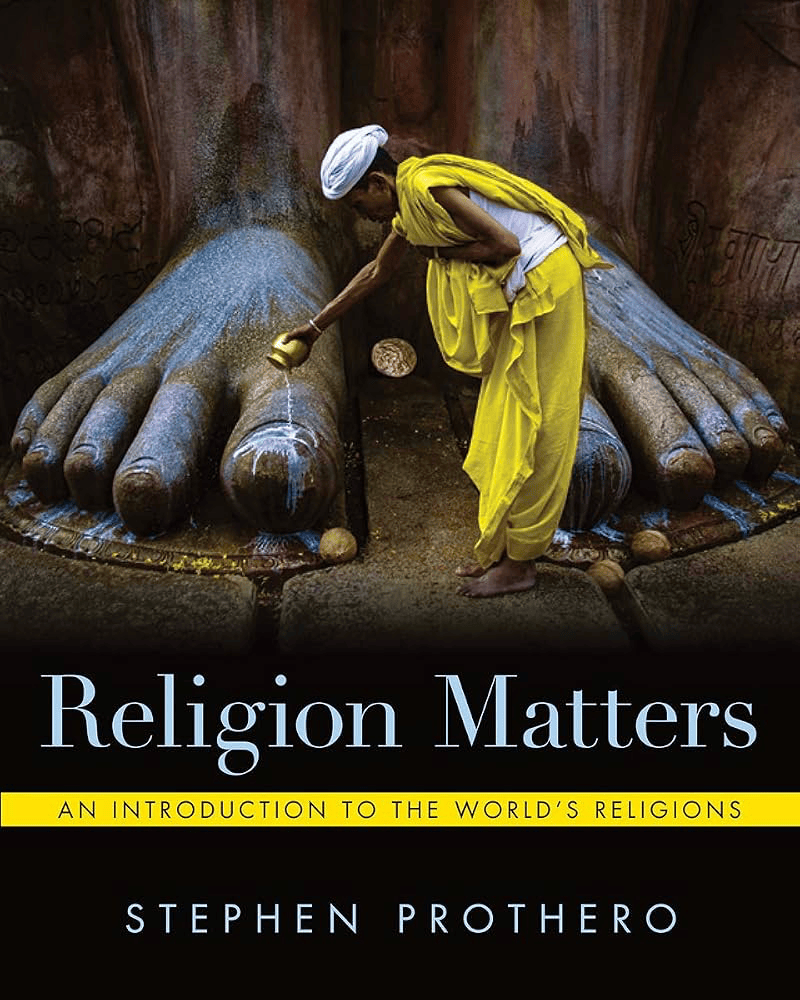
Renown American religious studies scholar Stephen Prothero’s introduction to religion textbook entitled Religion Matters has an additional chapter not found in world religion texts from pre-millennium days. Sure, it covers the religions of repair such as Judaism, Christianity and Islam; religions of release, including Sikhism, Buddhism and Hinduism; and then religions of reversion: Indigenous religions, Confucianism and Daoism. But the final category is the new one: religions of rejection: atheism, humanism, secularism, and agnosticism (the subtitle of the chapter is “The Way of No Way.”)
Secularism, writes Prothero, “is a worldview that emphasizes life on earth as opposed to transcendent realities, with an emphasis on strictly separating church and state.” Secularism rejects religious practise, language and symbols as public resources. Secularism assumes its own religious neutrality, but that’s the myth I would want to expose. It is a religion that rejects other religions.
Secularism is a Commitment with Religious Forms and Fervour
In other words, some religious studies programs are coming to realize ideologies like secularism are a worldview that has metaphysical commitments tied to it, and that such irreligion offers a prescription for how to make the world a better place–just like any other religion. Irreligion is religious in its rejection of religion. We argued for this understanding in our GSC webinar on Van Arragon’s book Religious Literacy. Secularism, like atheism and humanism, is a rejection of the transcendent, and assumes a materialistic worldview that considers other religions to be poor science, and thus offensive and dangerous to public life.
I realize there are versions of the secular that are more and less accommodating to other religions, but in one Canadian province we have a version that is adverse to any religious symbolism but its own. Now our Supreme Court has justified it, contradicting our Charter of Rights and Freedoms and the universal human right to religious freedom. It appears our national commitment to multiculturalism does not extend to multi-faith in public life. Those faiths that are not of the rejecting variety must be relegated to the invisibility of the private sphere. Or at least not show in the halls of public institutions.
I wonder how many Quebeckers realize that this kind of secularism replicates aspects of the former hegemony of the Roman Catholic Church in the province. The anti-religious symbolism laws call for a kind of consistency that protects against difference in public life. How different is this from Quebec in 1950? It is just the hegemonic symbols have changed. Pop culture symbols are exempt from these laws, and so a secular consumerism is all that is legally leftover to wear. Brand names, team names, and no names.
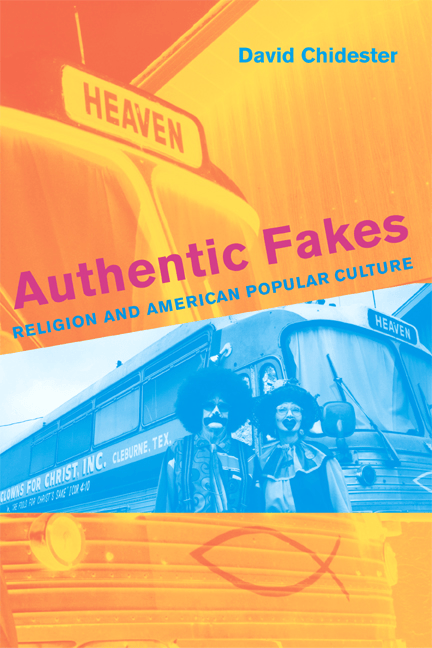
Religious studies programs have been studying the religious nature of pop culture for decades already. The Nike swoosh, the Edmonton Oiler jersey, the Gucci purse–they are quasi-religious symbols, too. This ruling is a double standard that favours some religions over others. Consider the now classic book by David Chidester Authentic Fakes: Religion and Pop Culture in America (2005) or God in the Details: American Religion in Popular Culture edited by Eric Michael Mazur and Kate McCarthy (2001). Pop culture carries religious and irreligious interpretations all the time.
All culture carries religious orientations. Paul Tillich said 100 years ago already that “Religion is the substance of culture, and culture is the form of religion.” Religion, he said, reveals our “ultimate concern” and this is expressed in cultural forms like language, art, symbols, clothing, and institutions. In other words, culture is the clothing of religion.
Canadian Responses to the Ruling
Our Canadian Prime Minister, Mark Carney, was careful in his response to the Supreme Court decision, recognizing that the judiciary has independent power, but he said the federal government will “not use the not withstanding clause,” and that they will defend “the full application of the Charter of Rights and Freedoms” and that this is “most important for minorities and those most vulnerable in our society.” He said he will “do what we can to protect those right and liberties.”

Will he move to make amendments to the constitution to accomplish such protections? We’ll see. “It’s complex,” he said.
Religious organizations are deeply concerned. Being forced to choose between “your livelihood or your most deeply held convictions was a dehumanising and cruel situation to inflict on people.” This quote comes from Stephen Brown, Chief Executive Officer of the National Council of Canadian Muslims (NCCM), also quoted in the article by Al Jazeera. The ruling is a denial of a human right, the right of religious freedom, freedom of conscience, and freedom of expression (if we consider religious symbols as a form of human expression).
These kinds of anti-religious laws will no doubt make religious minorities feel more aggrieved, and such resentment cannot be good for democracy. Some who are able, will leave the province. Those who cannot leave but feel their religious symbols must be worn will have to find jobs and volunteer opportunities outside of public institutions in Quebec. Quebec will be lesser for it. Laicity is the hegemony of one religious commitment, and it fosters an anti-pluralism that stifles democracy and public life.

